Despite 90 billion won in toll revenue, 55.1 billion won deficit: The reality of the 'fiscal time bomb' targeting Gangwon State
The Misiryeong Tunnel, connecting Inje and Sokcho, is facing a massive deficit despite collecting over 90 billion won in tolls since its opening in 2000.
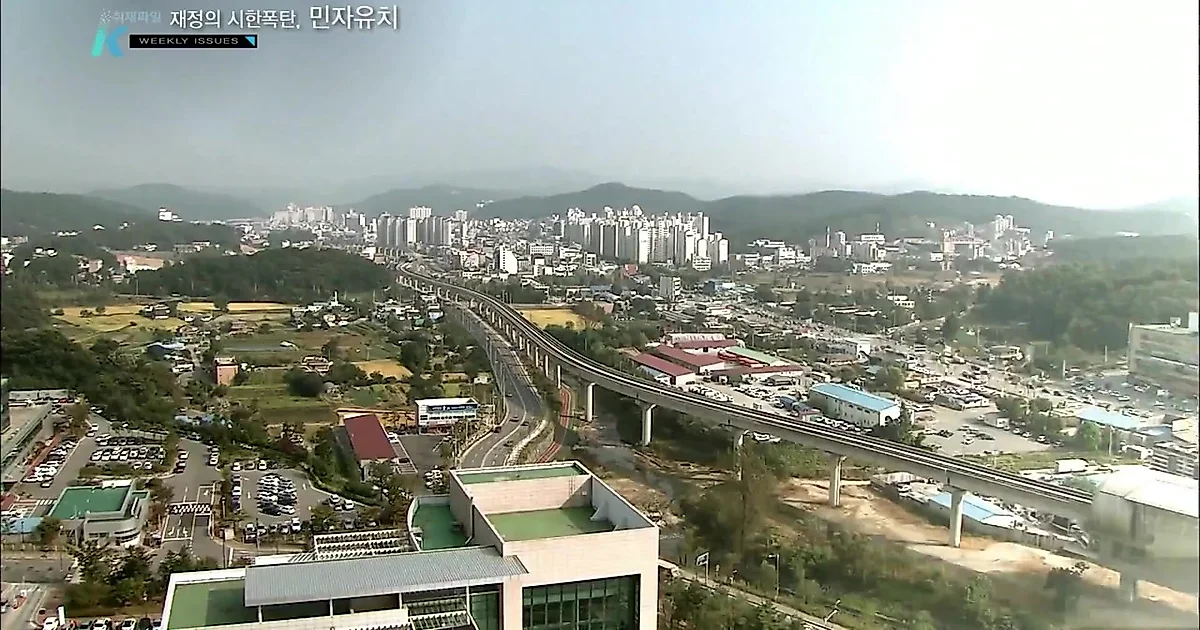
The Misiryeong Tunnel, which connects Inje and Sokcho in Gangwon State, is trapped in a serious deficit despite massive toll revenue. Since its opening in 2000, the accumulated toll revenue has exceeded 90 billion won, but the cumulative deficit has reached 55.1 billion won. The result of attracting 96.4 billion won in private capital—accounting for 38% of the project cost—has become a 'fiscal time bomb' that returns as a financial burden to the local government.
Profits go to National Pension Service interest, deficits are borne by the local government
The decisive reason why the Misiryeong Tunnel cannot generate a surplus lies in its revenue structure. This is because the interest expenses that must be paid to the National Pension Service, which holds a 100% stake in the tunnel, absorb most of the revenue. According to the video, the interest rate on the National Pension Service's investment is at a level of 9% to 20% per year, and specifically from 2027, the structure requires guaranteeing an interest rate of up to 65% per year for some subordinated bonds.
Due to this high-interest structure, not a single surplus has been recorded in the eight years since its opening. A contributor pointed out, "Companies accumulate deficits, and those accumulated amounts are eventually maintained through compensation from local governments or the central government," adding, "Management is being carried out in a negative pattern where investors take high-interest interest and recover their investment capital." Ultimately, the toll revenue is passed entirely to the investors as interest, and the deficit occurring during the operation process becomes the sole responsibility of Gangwon State.
The '544.1 billion won' disaster to be caused by the opening of the Seoul–Yangyang Expressway
A bigger problem is the scale of the financial support that will occur in the future. According to the agreement signed with the Misiryeong Tunnel, Gangwon State must pay financial support for the difference if the target traffic volume is not met. Currently, the toll for the Misiryeong Tunnel is 3,300 won for a small car, which, when converted to cost per 1km, is the highest level in the country.
According to a service report exclusively obtained by KBS, if the Seoul–Yangyang Expressway opens, the traffic volume of the Misiryeong Tunnel is predicted to plummet by as much as 83% compared to the agreement. This is because once the expressway, which is the shortest route, opens, there will be no reason to use the Misiryeong Tunnel. A research team from Kangwon National University projected that the financial support Gangwon State must pay until 2036 will reach a total of 544.1 billion won, including the amounts already paid. This is a massive amount that could support approximately 27,800 households for one year, based on the minimum cost of living for a family of four (1.63 million won per month).
Poor demand forecasting and lack of administrative response
The fundamental cause of this situation lies in the poor administration during the early stages of the project. The feasibility report prepared in 1999 concluded the feasibility of attracting private capital under the assumption that traffic volume would continue to increase. However, the Gangwon Development Research Institute, which prepared the report at the time, suggested that they had no choice but to represent the position of Gangwon State, implying that they excluded the construction plan of the Seoul–Yangyang Expressway, the largest variable, from their predictions.
The government also missed the opportunity for institutional improvement. In 2003, the government established standards to shorten the Minimum Revenue Guarantee (MRG) period for private roads and ease the local government's guarantee obligations if revenue falls short. Other local governments, such as Gimhae City in Gyeongsangnam-do, utilized this to proceed with renegotiations and reduce their financial burden, but Gangwon State failed to reflect these standards during the renegotiation in 2006.
Currently, the National Pension Service and the operator's position is that "since the agreement was signed based on the predicted traffic volume, there is no obligation to change the financial support." Gangwon State is considering renegotiation or legal litigation, but it is difficult to guarantee a victory because they failed to reflect the variable of the expressway opening during the initial agreement. The private capital attracted through irresponsible administration and failed predictions has returned as a massive boomerang threatening the finances of the local government.

하비이슈에서 사회·이슈 분야를 주로 취재합니다. 문화·라이프, 뉴스 기사도 함께 씁니다.



Comments 0