"I tried to die several times" — The reason a girl who went to Manchuria at 13 survived being stabbed 37 times
A survivor of wartime atrocities, Kim Won-ok, shares her harrowing experience of being sent to Manchuria at age 13 under false pretenses and her struggle to survive extreme violence. She emphasizes the need for a formal apology from the Japanese government for the victims of war.
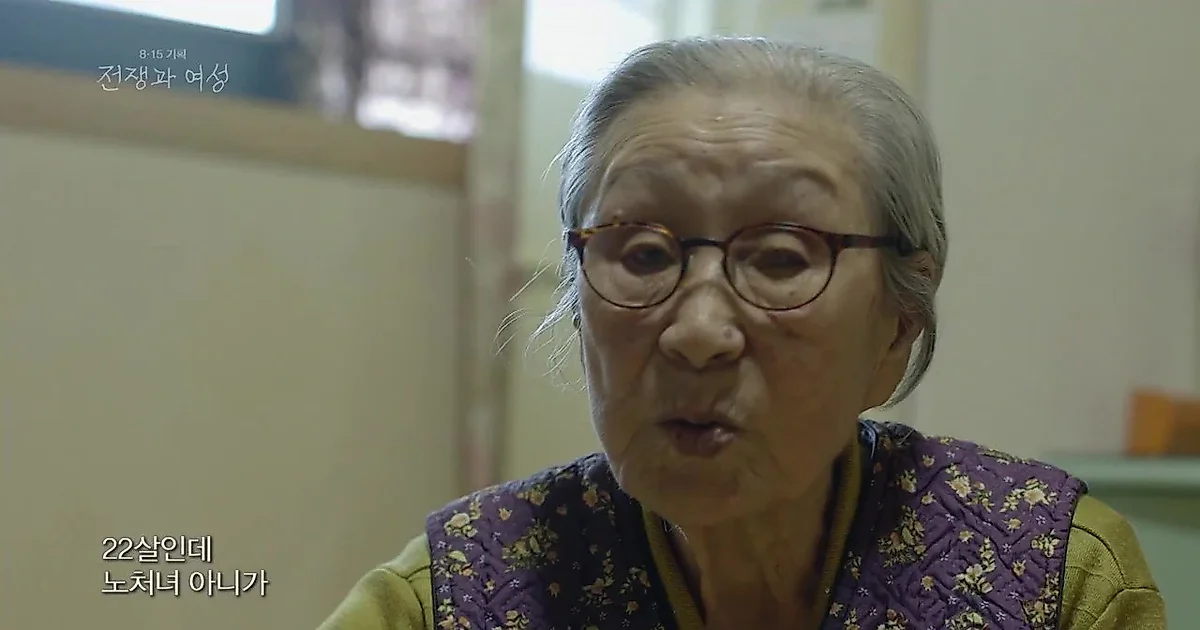
The cruelty of war destroys individual lives that cannot be converted into mere statistics or numbers. The life of one woman, who left for Manchuria at the young age of 13 and crossed the threshold of life and death several times due to the Japanese military, shows the strength of a human being who had to survive somehow, going beyond a record as a "weak being" who suffered damage.
"I tried to die several times"... A 13-year-old's journey to Manchuria based on a lie
According to the video 'KBS Special - War and Women, Part 1: Her Voice' on the KBS Documentary channel, the victim, Kim Won-ok (pseudonym), headed to Manchuria at the young age of 13. At the time, the grandmother had a 22-year-old sister, but the family decided on the trip to Manchuria to marry off their young younger sibling. At the time, her mother lied, saying, "Where in the world is such a place?" and claiming they were going to a factory, but this ultimately became the beginning of a tragedy. Recalling the situation at the time, the grandmother testified, "It wasn't a factory, it was a place where there were only Japanese soldiers." It was a structure where people who sang in houses selling alcohol were brought in to deal with the soldiers.
The grandmother conveyed the desperate situation at the time, saying, "Because they said they would give money, I thought I would earn some money here, buy some clothes, and then still have to go." However, the reality was harsh. She revealed her feelings of having to suffer for a lifetime due to the disgrace and pain she experienced at the time, asking, "How could I get married with that body?" The participant in the video conveys that the grandmother was in such an extreme situation that she "tried to die several times." The grandmother calmly but painfully murmured her despair at the time, saying, "I went at fifteen (omitted) even dying is my fate."
"I had to stay sharp"... A desperate will toward survival
The reason the grandmother was able to endure even in situations where her life was threatened, such as being stabbed 37 times by the Japanese military, was her instinctive will toward survival. Recalling the urgent moments of that time, she said, "I told myself I must stay sharp and not collapse just because those people act that way." Her testimony that "I could only think of escaping that place somehow" even while undergoing terrifying things shows how humans seek survival amidst extreme fear.
In the video, she also appears reluctant to directly mention the pain she experienced. Her appearance of trying to push away past memories, saying, "It is a disgraceful word for my womanhood" and "I don't want to imagine it," suggests the indelible stigma that war crimes leave on the current lives of victims. However, the grandmother was continuing her life by sublimating her painful memories into song. She showed that rather than suppressing sadness, she endured the weight of life through the method of singing, saying, "I digest even hard things through song; I don't really do things like crying."
A life digested through song, an unceasing demand for apology
The grandmother also shares laughter with people around her while singing soulful songs. In the video, she communicates with those around her by singing songs such as "Namjungnara-ne gohuiyang ondobi baeyangseo." This is not merely a means to forget the past, but is closer to a way of survival to raise her trampled life by herself. The grandmother calmly explained the situation that oppressed her and the years she lived within it, saying, "More than being scared, I am distressed because I am distressed if I don't do what I'm told, and the person who told me is also distressed, so let's not do that."
However, behind the tranquility of life, an unresolved task still remains. The grandmother emphasized, "I must receive an apology from the Japanese government," and "I will never give up." When the anniversary of the end of the war or victory anniversaries are objects of celebration, the fact that there are tens of thousands of women who were dragged into war without fault and have not yet returned alive reminds us once again that this issue is a matter of national and historical responsibility beyond an individual tragedy.

하비이슈에서 사회·이슈 분야를 주로 취재합니다. 문화·라이프, 뉴스 기사도 함께 씁니다.

Comments 0