"It is merely a moral responsibility" Medical accidents hidden behind hospital manuals, falsified records, and a 0.6% winning rate
A KBS Documentary investigation reveals how large hospitals use professional response manuals to evade responsibility and pressure patients' families during…
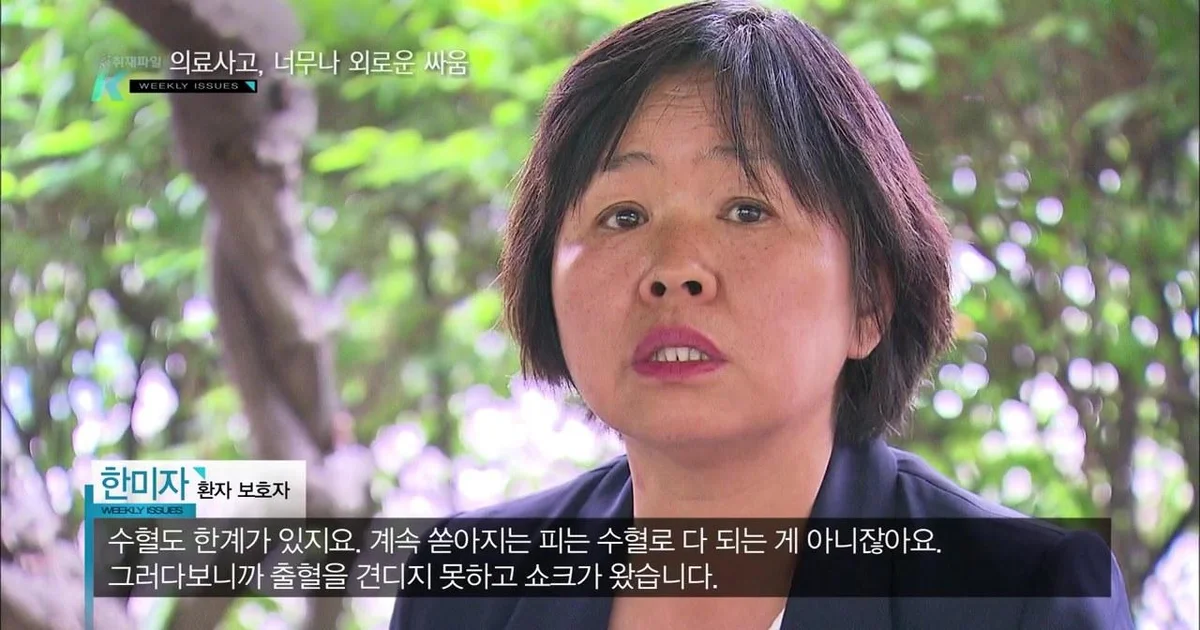
When a tragedy occurs where a patient who entered the operating room in a healthy state fails to return, the grief faced by the remaining family is not the only burden. The endless struggle to prove medical negligence, along with the massive costs and the way hospitals respond during that process, makes them weep a second time. According to the video from KBS Documentary's 'Investigation File K', when medical accidents occur, large hospitals operate professional response manuals to create a structure that evades responsibility or pressures the patient's side.
"There is moral responsibility, but no negligence" The hospital's response manual
When a medical accident occurs, the administration department or legal team steps forward instead of the doctor in charge of treatment. According to a hospital official, medical staff are trained according to a set response manual not to make "statements prematurely admitting responsibility." While they can mention "moral responsibility" to express sympathy to the patient, this is to avoid the liability that arises the moment legal negligence is admitted.
In this response process, hospitals also utilize economic factors as a means to pressure the patient's side. In a case shown in the video, the family of a patient who has been lying in the intensive care unit for two years due to hypoxic brain injury following a kidney transplant is depicted in a situation where they are being pressured to pay hospital bills amounting to 80 million won. As the patient's side responded actively by requesting an appraisal of medical records, the hospital showed attempts to settle by offering "consolation money"—meaning the costs required to move to another hospital—while refusing to admit negligence.
There are even cases where, if a damages lawsuit is underway regarding a medical accident, hospitals pressure the patient's family by demanding settlement of medical fees or suspending insurance benefits. Some hospitals even express their intention to refuse treatment, stating "we will not provide treatment," once the patient's side files a lawsuit.
20 modified medical records, a full winning rate of only 0.6%
The core issue of a medical accident is the "medical record." If this document, which records everything from the inpatient status to the progress of surgery and the doctor's actions, is falsified, the patient loses any way to prove negligence. The video introduces a case where the family of a patient who died after a biopsy discovered during the lawsuit process that the records submitted by the hospital to the court were different from the original records. The contents modified in the medical record reached about 20 places, and actions that did not exist were added, or even the time the doctor took action for the patient was changed.
In a situation where information asymmetry is this severe, the probability of a patient fully proving medical negligence and winning is extremely low. According to statistics presented in the video, the number of filed medical lawsuits increased from about 870 cases in 2010 to 1,100 cases in 2013, but the "full winning rate"—where patients receive all the compensation they demand—was only 0.6% as of 2013. Victims point to the closed nature of information, along with the structural limitation where doctors must appraise other doctors, as the primary causes.
17,000 preventable deaths annually, yet an absence of status surveys
The scale of medical accidents is much larger than expected. According to a 2012 survey by the University of Ulsan College of Medicine, it is estimated that the number of patients dying from preventable in-hospital safety accidents in South Korea reaches approximately 17,000 every year. This figure exceeds three times the annual number of traffic accident deaths (about 5,000). However, despite this scale, a nationwide status survey at the government level has never been conducted even once.
The number of applications to the Korea Medical Dispute Mediation and Arbitration Agency to resolve medical disputes has surged from about 500 cases to about 1,800 cases over the last two years. However, the mediation system has a fatal limitation where the procedure can only begin if both the hospital and the patient agree. Since there are no regulations to force it if the hospital refuses, the structure is such that whether mediation occurs is effectively decided by the hospital's will. Although the government enacted the Patient Safety Act to vitalize medical accident reporting, controversy over its effectiveness continues as it also lacks mandatory enforcement.
Ultimately, victims of medical accidents continue their lonely fight in front of the wall of closed medical information, carrying the heavy burden of the responsibility to prove.

하비이슈에서 사회·이슈 분야를 주로 취재합니다. 문화·라이프, 뉴스 기사도 함께 씁니다.



Comments 0