"I don't want to graduate" The reasons why children love childcare centers and the wishes of teachers
According to a recent video released by the Ministry of Education of the Republic of Korea, children perceive childcare centers as joyful spaces due to free play environments and diverse experiential activities. The video also highlights the need for teacher well-being to ensure the quality of education and children's happiness.
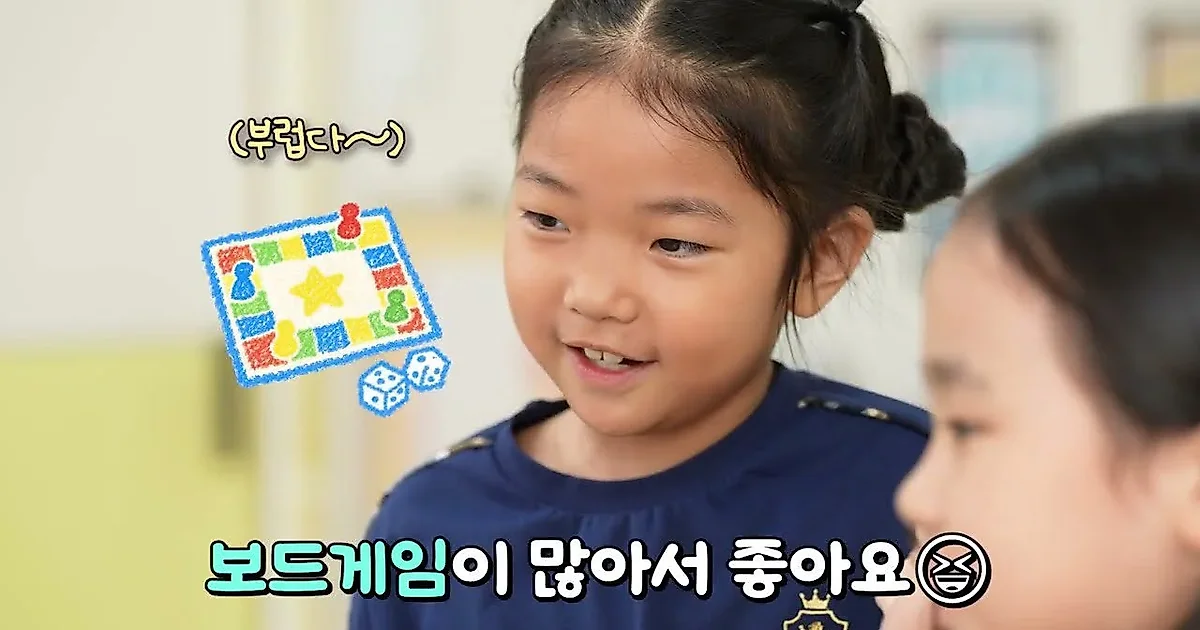
According to a recently released video from the Ministry of Education of the Republic of Korea, the key factors in children perceiving childcare centers as joyful spaces lie in the 'free play environment' and 'diverse experiential activities.' In the video, children cited abundant toys and board games, as well as time spent with teachers and friends, as advantages of the childcare center.
A learning environment combining nature and play, "I don't want to graduate"
The daily routine at Bomnarae Childcare Center featured in the video is structured around the children's voluntary exploration and play. Children enjoy activities such as observing ants in the forest behind the childcare center or encountering nature, and they build sensory experiences, such as tasting food they made themselves through cooking activities. In particular, the children in the video expressed a high attachment to the space, saying, "We play a lot at the childcare center," and "When I graduate, can I stay (at the childcare center) longer?"
The learning methods also deviate from standardized frameworks. Children learn about various professions and themes, such as buildings from around the world, nutritionists, and zookeepers, and they encounter broad areas including physical education, janggu, English, and Hangeul by combining them with play. The video captures the process of children creating their own play using the large auditorium, playground, and forest. This environment serves as a foundation for children to develop social skills and learn the power to do things on their own.
"For a child to be happy, the teacher must be happy" Voices from the field
Teachers who help children grow mentioned the children's individuality and sociality as major characteristics. A teacher in the video mentioned the various charms of five-year-olds and the abundant curiosity of six-year-olds, noting that they form such familiar relationships that children greet adults warmly first.
However, the realistic difficulties felt by teachers in the field were also mentioned. In sites operated through the support of assistant teachers from the Ministry of Education of the Republic of Korea, it was diagnosed that as the quality of education increases, more energy is required to care for the children. A teacher appearing in the video emphasized that "For a child to be happy, the teacher must be happy," expressing the opinion that they hope policy efforts to listen to teachers' voices and improve the educational environment will continue.
Ultimately, this suggests that children's enjoyable life at childcare centers is sustainable when, alongside abundant play spaces, an environment is supported where the teachers operating them can focus on education stably.

하비이슈에서 사회·이슈 분야를 주로 취재합니다. 문화·라이프, 뉴스 기사도 함께 씁니다.



Comments 0