The Shadow of $680 Billion in Orders: Small Subcontractors Trapped by Verbal Instructions and 'Slave Contracts'
Small subcontractors working on overseas construction sites face existential crises due to unfair contracts and a lack of legal protection from large…
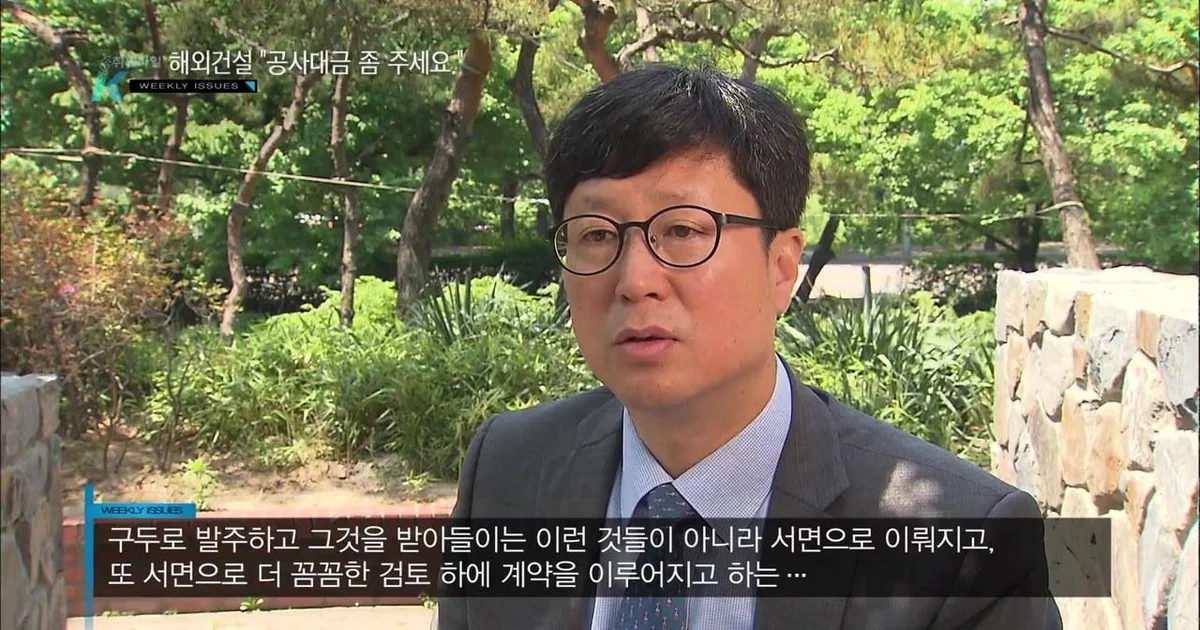
The cumulative amount of overseas orders for South Korea's construction industry reaches $680 billion, or approximately 680 trillion won. The overseas construction boom that began in the 1960s was a growth engine to overcome the domestic economic slump, but behind this massive outward growth lies an unequal structure between large construction companies and small subcontractors. According to a KBS documentary, small subcontractors operating at overseas sites are facing the risk of collapse due to unfair contracts by prime contractors and a lack of legal protection.
"Verbal orders only, payment undecided"... The reality of verbal instructions and unfair contracts
At overseas construction sites, cases where additional work is ordered verbally instead of through written contracts, followed by a refusal or delay in payment once the work is completed, are occurring frequently. A representative case is that of SM General Development, which participated in a thermal power plant construction site in Saudi Arabia. An interviewee in the video, acting as a subcontractor for Samsung C&T Corporation, conducted electrical piping work but claimed that the deployment of manpower and equipment increased due to delays in preceding processes during the construction. In this process, Samsung C&T Corporation allegedly gave instructions for additional work only verbally, and the work proceeded without clear consultation regarding cost settlement.
The subcontractor requested receipt processing to cover their deficit, but the prime contractor, Samsung C&T Corporation, paid only a portion of the costs, claiming they could not trust the details. In particular, just two weeks before the completion of the construction, Samsung C&T Corporation notified them of contract termination and, in this process, recovered approximately 2.4 billion won in contract performance bonds. The subcontractor is demanding approximately 10 billion won in additional construction payments, but the prime contractor maintains the position that the subcontractor must bear the damages caused. Regarding this, a representative from the subcontractor expressed their desperate situation, saying, "That is telling us to die."
Another company, Jeongpung Development, also abandoned construction midway and has not received payment for 20 months, with the unpaid amount estimated to exceed 19 billion won. According to the contents of the contract shown in the video, the authority to calculate additional construction costs is concentrated in the prime contractor, and the structure is designed so that the subcontractor must bear the cost burden resulting from construction delays, making it difficult to avoid criticism that it is effectively a 'slave contract.'
Because they are overseas local corporations... The 'blind spot' of the domestic Subcontracting Act
The fundamental reason why small subcontractors find it difficult to resist such unfair contracts lies in the absence of a legal safety net. The domestic Subcontracting Act is based on the principle of protecting transactions between domestic companies. However, in the case of overseas construction sites, the contracting party is often an overseas local corporation, creating a blind spot where the domestic Subcontracting Act cannot be applied. To prevent unfair transactions at overseas construction sites, the Korea Fair Trade Commission has established the 'Standard Construction Subcontract Agreement' and recommends written issuance and actual cost settlement, but these are merely recommendations without mandatory force.
In fact, although the Korea Fair Trade Commission pointed out that the contract between Samsung C&T Corporation and the subcontractor was an unfair contract, it stated the limitation that it is difficult to impose legal sanctions through the domestic Subcontracting Act because the contracting parties entered into the contract in the capacity of overseas corporations. This legal vacuum is a structural cause that forces small businesses to accept unfair contracts even while enduring unfavorable conditions in order to secure the next construction order.
Even after receiving a direct payment agreement... Diverging responsibilities and evasion of accountability
The issue of evading responsibility regarding payment is also serious. KNHI, a sub-subcontractor that participated in a construction site in Malaysia, entered into a contract with WGL, a subcontractor of CJ Construction, but has not received approximately 1.8 billion won in construction payments. KNHI requested a 'direct payment agreement,' with the prime contractor CJ Construction stating they would pay the amount directly, but ultimately, CJ Construction did not pay. CJ Construction showed a position that payment is difficult because they cannot reach the intermediary company WGL, but WGL, on the other hand, showed a pattern of shifting responsibility, claiming they cannot make payments because they have not received the funds from CJ Construction.
Under the domestic Subcontracting Act, there are regulations that can force a prime contractor to pay a sub-subcontractor directly, but this also depends on whether the company in question is classified as 'manufacturing' or 'construction.' If classified as construction, it is difficult to exercise legal enforcement, so subcontractors who have not received payment are being driven to the brink of collapse helplessly even amidst legal disputes.
Conclusion: The urgency of institutional supplementation and legal amendment
While the scale of the overseas construction market is growing, the reason the fruits of that growth do not reach small subcontractors is due to unfair contracting practices and the lack of legal mechanisms to regulate them. While the bill for legal amendment, which focuses on the conclusion of transparent written contracts and prompt dispute resolution, remains in the National Assembly of the Republic of Korea, small businesses at overseas sites are still facing the threat to their survival, such as 'unsettled payments,' in a legal blind spot.


Comments 0