"Care Gaps and Lack of Manuals Hidden Behind Quarantine Success"... The Light and Shadow of COVID-19 Social Responses
The Korea Disease Control and Prevention Agency and the Korea Institute for Health and Social Affairs co-hosted the "2026 First Forum on Social Responses…
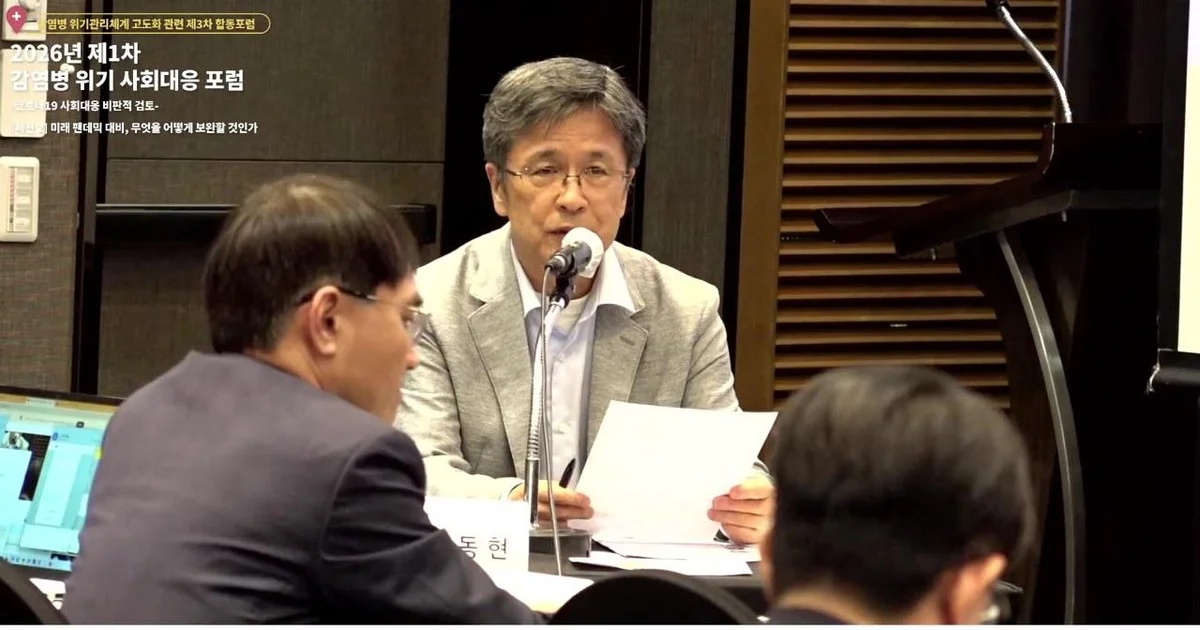
A venue was prepared to look back at the social challenges left by the COVID-19 pandemic and to seek scientific and social response systems to prepare for future infectious disease crises. On the 21st, the Korea Disease Control and Prevention Agency and the Korea Institute for Health and Social Affairs co-hosted the '2026 First Forum on Social Responses to Infectious Disease Crises' and critically reviewed the social response measures implemented during COVID-19.
The Gap Between Quarantine Success and Protection of Fundamental Rights
This forum began from the recognition that the COVID-19 response went beyond the simple realm of health and medicine and had a massive impact on society as a whole, including economy, education, care, and social security. In his commemorative speech, Lim Seung-gwan, Director of the Korea Disease Control and Prevention Agency, acknowledged the achievements in protecting lives by suppressing the spread of infection, but also suggested that challenges remain to be solved, such as the effectiveness of policies, socioeconomic impact, public acceptance, and the impact on vulnerable groups.
Lim emphasized, "Social response cannot be evaluated solely by quarantine effectiveness," adding, "We must collectively consider how to protect the fundamental rights of citizens, how to minimize economic and social damage, and how society will protect the vulnerable." Accordingly, a direction was presented that future responses must possess a decision-making system that integrates experiences from various fields such as law, economy, society, and education, in addition to scientific evidence.
The Absence of Manuals and the Need for the 'Korean Emergency Disaster Assistance Model'
While it was evaluated that Korea's response achieved a certain level of success in terms of quarantine, economy, and distribution, structural limitations that appeared during the response process were also pointed out. Shin Young-seok, President of the Korea Institute for Health and Social Affairs, mentioned in his commemorative speech that Korea's response achieved results that were not lagging behind Western countries in terms of indicators, but he also pointed out specific problems during the response process.
Shin explained, "By prioritizing the closing of public sectors such as daycare centers and schools, the responsibility for care shifted to families, and support often ended up being short-term and temporary prescriptions." In particular, he cited as a limitation that because there was an absence of clear manuals for social response during the crisis situation, principles had to be discussed from scratch at every moment, which caused significant time to be spent on decision-making.
In relation to this, citing existing research from the institute, suggestions were made regarding the need to establish a 'Korean Emergency Disaster Assistance Model' that fits the context of Korean society and allows the central and local governments to cooperate. Starting with this forum, the Korea Disease Control and Prevention Agency plans to regularize academic and policy forums for social response and build a system where voices from the field can be reflected in actual response manuals.
Comments 0