The 33-Hour Battle from Catching Geoje Island Octopus to the Dining Table: The Secret to Fresh Delivery
A documentary by EBS reveals the intense 33-hour process of delivering fresh octopus from the waters of Geoje Island to consumers…
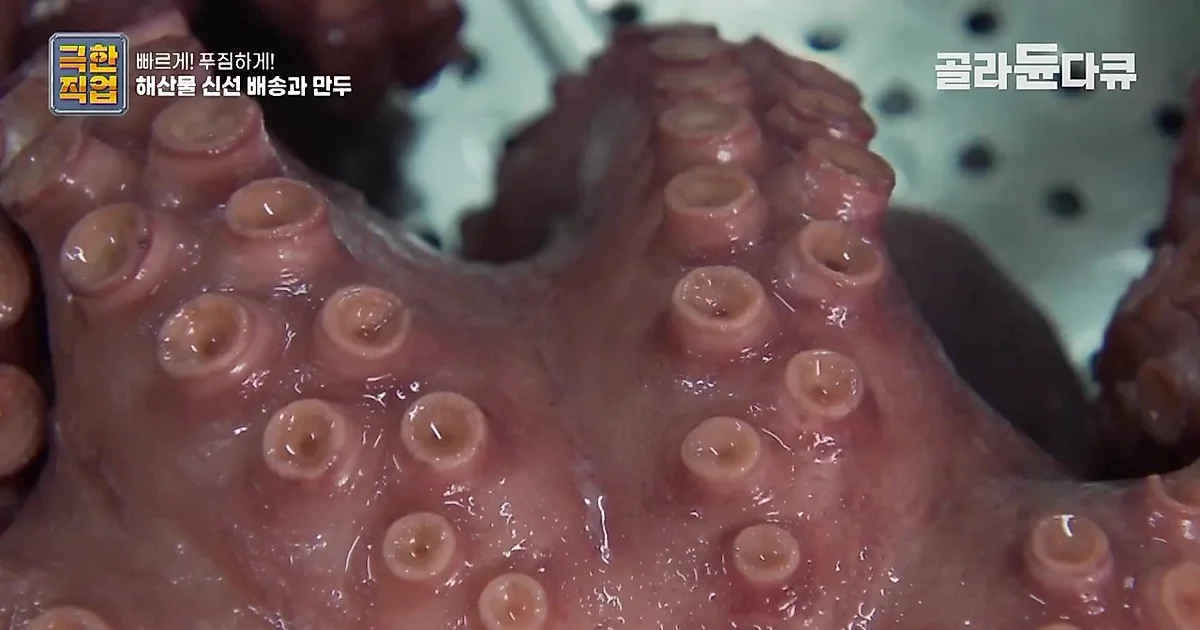
The time it takes for octopus, freshly caught in the waters off Geoje Island, to reach a consumer's dining table is only 33 hours. According to an EBS documentary video, to maintain freshness within this short period, every process—from the fishing site to the processing factory and the delivery stage—moves urgently.
Traditional 'Danji' Fishing and the Dangerous Catching Site
The start of fresh octopus delivery begins with 'Danji octopus fishing,' a traditional fishing method in the waters off Geoje Island. This method utilizes the habits of the octopus by casting a net with plastic 'danji' (containers) and then pulling them up. In the past, earthenware jars were used, but currently, plastic is used. A participant in the video explains the fishing site, saying, "This is the spot where the danji were cast three days ago." Danji octopus fishing takes advantage of the characteristic where octopuses repeatedly enter and exit the containers; compared to other methods, it has the advantage of maintaining quality as there is less risk of damaging the octopus's upper body.
However, the fishing process is by no means smooth. Since the weight of a danji reaches 100kg to 200kg, if an accident occurs such as a danji overturning or getting tangled in the net lines during fishing, there is a risk of workers sustaining major injuries to their arms or hands. In particular, when the catch does not meet expectations, strenuous work continues, such as spraying water or using a torch to pull the octopus out of the danji. In the video, a scene was captured where an octopus curiously crawls out as soon as a torch is applied. Geoje octopus are caught year-round, but now, when the cold wind blows, is the season when they are the largest and most delicious.
Oxygen-Injected Packaging and the Precise 100-Degree Boiling Process
The caught octopus is immediately moved to a fresh delivery company. Here, approximately 700kg to 800kg of octopus are processed per day. To maximize the freshness of the live octopus, the core process involves directly injecting 'oxygen' along with seawater into specially manufactured packaging containers. When the packaging is hermetically sealed with a mixture of half seawater and half oxygen, the octopus feels as comfortable as if it were in its own home, maintaining its freshness. After packaging is complete, it undergoes durability inspections to prepare for delivery.
Meanwhile, the process of making 'boiled octopus' that can be eaten immediately requires even more precise technology. When boiling the octopus, the temperature must be maintained within a margin of error of about ±2 degrees from the 100-degree standard to produce top-quality taste. Workers must fight against hot steam to maintain this precise temperature. The video emphasizes, "Since it becomes tough if boiled for too long, exact timing is important." For example, boiling 50kg results in approximately 40 to 150 octopuses being cooked. Well-boiled octopus is immediately placed in cold water to maintain a bouncy texture, and workers manually wash each piece of foreign matter remaining on the octopus leg suckers. Since there are over a thousand suckers on a single octopus leg, meticulous handling is essential.
The Speed War of Meal Kit Delivery Handling 3,000 Units a Day
Since the increase in dual-income and single-person households after COVID-19, demand for seafood meal kits that handle the difficult seafood cleaning has surged. Meal kits, which have diversified menus such as seafood stew, grilled scallop, and pasta, are completed through the cleaning and processing of various sub-ingredients such as vegetables and seasonings, as well as seafood like blue crab, octopus, scallop, and abalone. The delivery company in Geoje processes about 3,000 units every day, a significant portion of which are seafood meal kits including octopus. The decisive secret to maintaining freshness ultimately lies in 'speed.'
Before the delivery vehicles arrive, workers proceed with filling ice and packaging as quickly as possible. According to the video, "Because freshness is maintained longer if it is put in and packaged as quickly as possible." In particular, since the work speed is hindered when the wind begins to blow, the role of experienced workers is very important. This place is where about 200 types of seafood, including not only octopus but also natural oysters, pen shells, and Manila clams collected by haenyeo (female divers), gather. After processing and packaging are completed through processes like oyster harvesting that cannot be done by machines, the seafood is delivered to consumers' dining tables nationwide in the shortest possible time.




Comments 0