'Mother of Georgia' Holding a Wine Glass in One Hand and a Sword in the Other… A Way of Life Preserved Amidst Invasions
Georgia has maintained its unique culture and identity despite centuries of foreign invasions. From the symbolic Mother of Georgia statue in Tbilisi to the defensive Svan towers in Mestia and its ancient wine-making traditions, the nation's history is etched into its landscape and customs.
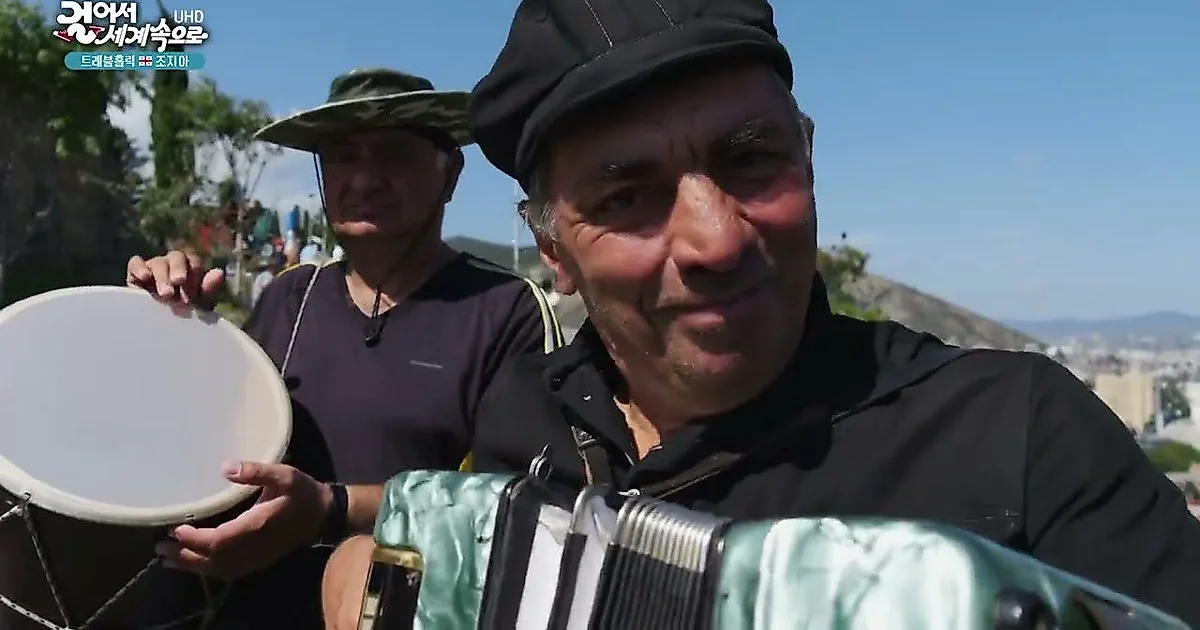
Located at the crossroads connecting Asia, Europe, and Russia, Georgia is a place that has preserved its own culture despite experiencing numerous invasions by foreign powers. Since the 6th century, it has experienced continuous rule by Persia, Arabs, Mongols, Iran, Russia, and the Soviet Union, but it has maintained its unique identity after achieving independence in 1991.
A Symbol of Georgia Holding a Wine Glass in One Hand and a Sword in the Other
The capital of Georgia, Tbilisi, is divided into a new city and an old city by the Utsbari River. Freedom Square, where citizens once gathered to defend their freedom, is currently vibrant as a flea market selling antiques and handicrafts. Near the cable car station, where one can view the cityscape, a massive fortress sits upon the city walls.
At the top of the hill connected to the fortress stands the Mother of Georgia. This statue depicts a figure holding a wine glass in one hand and a sword in the other. This carries the meaning of warmly welcoming friends and guests, while bravely confronting enemies. Even through a precarious history where the masters of the city changed several times and earthquakes occurred, the fortress still holds its place.
5-Story 'Svan Towers' Built to Block Invasions
If you head to Mestia, a small mountain village in the Svaneti region of northwestern Georgia, you can encounter unique architecture. In this village of about 3,000 people, there are 'Svan Towers (Koshki)' rising from every house. These are typical structures built along with houses to prepare for foreign invasions, usually reaching 5 stories in height.
The internal structure of the Svan Tower is optimized for defense. The first floor is used as a space for raising livestock, and the space becomes progressively narrower as you move up the floors. It is said that in the past, people moved up and down using ropes instead of stairs. The top floor has windows that allow one to look down in all directions, and it was used for purposes such as shooting arrows or pouring hot water to block enemy intrusions.
500 Varieties of Grapes and Handcrafted 'Qvevri' Jars
Due to the influence of the Caucasus Mountains, Georgia possesses an environment favorable for grape cultivation. There are about 500 varieties of grapes grown here, and efforts are made to protect origins and maintain diverse wine flavors by cultivating unique varieties in each region. Since gaining independence in 1991, Georgians have worked hard to revive the quality of the once-declining wine industry.
The core of Georgian wine making is the jar called 'Qvevri.' Discovered during the process where wild grape juice turns into wine, the entire process of these jars is done by hand. Once completed, the Qvevri undergoes a process of being coated with beeswax and resin and dried thoroughly; for large jars, the production alone can take several months.

하비이슈에서 문화·라이프 분야를 주로 취재합니다. 사회·이슈, 건강·과학 기사도 함께 씁니다.



Comments 0