"An Era Where Cutting Ties is Natural": Author Jung Ji-a Speaks on the Weight of Relationships and Rural Affection
Author Jung Ji-a discusses the modern phenomenon of "cutting ties" (sonjeol) and compares the social dynamics of urban and rural environments.
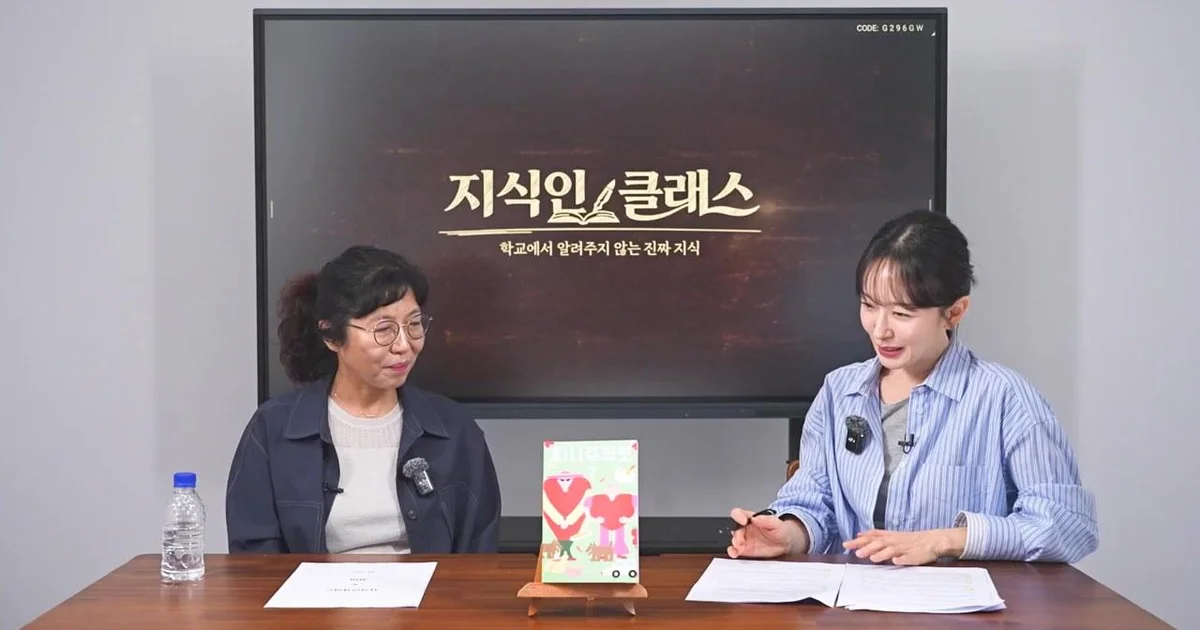
In our society recently, people do not hesitate to use the expression 'sonjeol' (cutting ties) when experiencing conflicts in human relationships. Ending relationships due to differences in wedding gift amounts or minor inconveniences has become established as a kind of culture. Appearing on a Jisik Inside video, author Jung Ji-a presented a reflective view on this phenomenon and shared stories about attitudes toward relationships and changes in community.
"Cutting ties over wedding gift differences?" A cross-section of an era where cutting ties is rampant
In the video, the participant mentioned the 'sonjeol culture' where people immediately cut ties as soon as they feel even a little discomfort. For example, someone might judge it as a 'moment to cut ties' by saying, "I gave one million won to a wedding, but the other person only gave three hundred thousand won." Regarding this, author Jung Ji-a mentioned that "there are parts where someone has to bow down once," referring to the phenomenon of giving up the depth of a relationship to avoid rudeness.
The author confessed that until her early 40s, she was so cautious about relationships that she thought one had to be friends for 10 years, and she even experienced pushing away people who clung to her. However, in the end, it was those people who approached her that maintained the relationships. The author advised that while there are clearly situations that must be cut off, such as gaslighting or exploitative relationships, cutting ties based on simple profit and loss calculations can lead to a coldness in human relationships.
The author explained the accumulation of relationships through her experiences in the countryside. She said that in the rural area where she has lived for 15 years, there were neighbors who would burst through the door without calling, which initially caused stress due to issues like cleaning. However, she shared that as she lowered her standards for others and exchanged hearts by bringing pumpkins or delicious side dishes because she felt bad coming empty-handed, she eventually experienced becoming part of 'relationships that cannot be cut off.' The author added, "If a certain older sister's stir-fried anchovies with red pepper paste are delicious, I shamelessly demand to visit again," noting that such give-and-take creates the meaning of each other's existence.
City and Countryside: Why does the city feel harsher?
Based on her experience living in the countryside, author Jung Ji-a explained the decisive difference between the city and the countryside. The countryside is a place where 'feudal elements' and the characteristics of collective work, such as farming, are combined. Because people in the countryside live rooted in the land, a culture is formed where they must endure and tolerate even if they dislike someone, because they must farm together to survive. This was an inevitable choice for the survival of the community.
On the other hand, the capitalistic-centered city has fluid living conditions. Workplaces and residences change frequently, making it difficult to take root in one place. The author's analysis is that because the city is not a system where neighbors help each other survive, it is an environment that is structurally bound to become harsh. Recent phenomena in the city, such as 'nuisance controversies' or 'kan-k (violation of audience manners),' also show a cross-section of the conflict arising between individual freedom and community harmony.
The author diagnosed that as the problem of making a living was solved through the development of capitalism, individual rights and freedoms finally became important. However, since a society that satisfies the freedom of all people is impossible, she explained that from a utilitarian perspective aiming for 'the greatest happiness of the greatest number,' there are times when sacrifice and giving up for the sake of the community are necessary.
How to become free from the gaze of others: "The support of one person"
For modern people who react sensitively to the gaze and evaluation of others and feel anxious, the author emphasized 'confidence.' Borrowing characters from the novel 『Jjini Alert』, she emphasized the importance of an attitude of living confidently against social prejudice or gazes. In particular, the character 'Su-won' in the novel is seen by the villagers as a strange and unusual existence, being a Vietnamese migrant woman and a lesbian, but she does not shrink from those gazes and fights back confidently. The author expressed her hope that people do not get too hurt when they are not understood in such an imperfect society.
The author mentioned that "it is impossible for everyone to be loved by everyone," noting that even global stars like BTS cannot be free from the gaze of others. To not be swayed by the words of others, she advised that it is necessary to adjust the scope of one's relationships themselves. The author also mentioned the advantage that because she only had three friends until her early 40s, she was not greatly swayed by what others said, and thanks to that, she did not waste time because of human relationships.
In particular, the message that "even if the whole world does not understand me, if just one person believes in me, I will gain the strength to live in the world" delivers a deep resonance to those exhausted by the gaze of others. The author emphasized that someone's support becomes a powerful driving force in life, stating that she was able to live her life well because even if the world said she was ugly, her mother believed she was the best.
Comments 0