The Engineer Who Drew Circuit Diagrams by Hand: The Record of 'A-501', the Beginning of South Korea's IT
A KBS documentary explores the origins of South Korea's electronics industry through the 'A-501', the first domestically produced radio released in 1959.
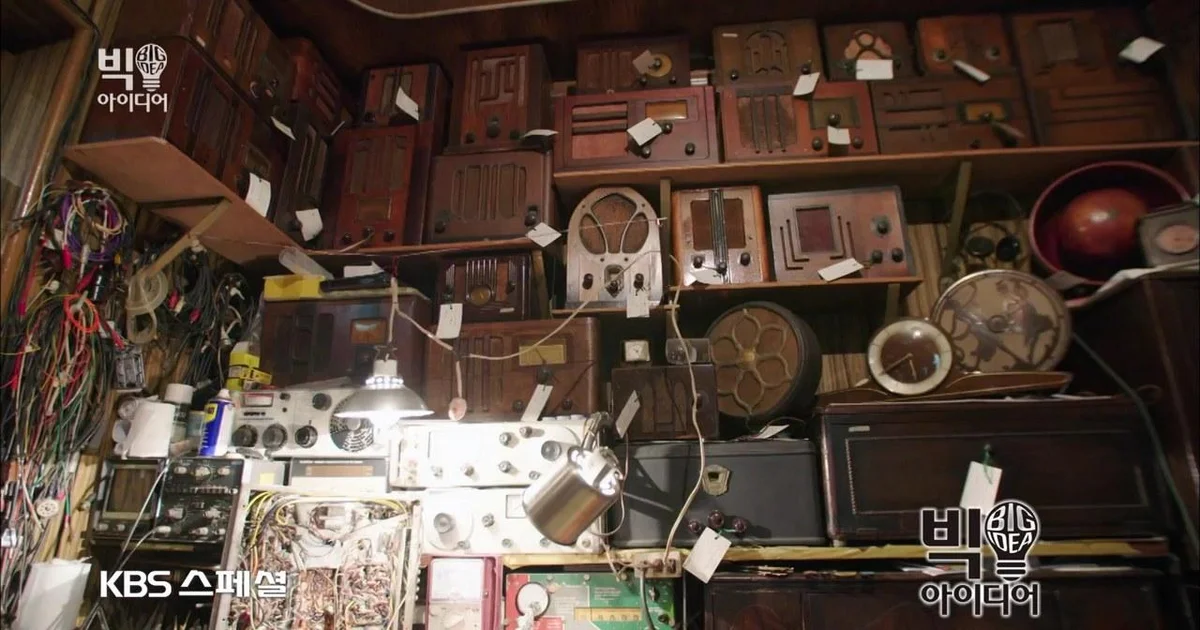
Before South Korea stood tall as a global IT powerhouse, the starting point was the fierce struggle and 'big ideas' of nameless engineers. A video released in a KBS documentary illuminates the dawn of South Korea's electronics industry through the 'A-501', the first domestically produced radio born in 1959. Passing through a time just 40 years ago when communication was barely possible via telegram, this small radio is the root of the flow that led to the universalization of telephones in the 70s, the birth of the first domestic PC in '81, and the success story of semiconductors.
'Pragmatic' design that clashed with the German technical advisor
The birth process of the first domestic radio, A-501, was not smooth. At the time, GoldStar had scouted a German technical advisor, Mr. Henke, to proceed with technology development, but they experienced intense disagreements with field engineers regarding the product's design. According to the video, Mr. Henke argued that great attention should be paid to the external design, but this situation could lead to excessive parts importation and affect the product price.
Opposing this was the judgment of engineers who emphasized practicality. Kim Hae-su, who was a member of the GoldStar recruitment class at the time, advocated for a design focused on practicality to offer a reasonable price to consumers. The A-501 was designed with a focus on function without any unnecessary additions, and it featured a configuration where the back panel was not assembled with screws but simply pressed in, allowing it to be easily removed. Ultimately, through a vote by company executives, Kim Hae-su's practical plan was adopted by an overwhelming margin, a process that also resulted in Mr. Henke resigning as he could not narrow the difference in opinion.
An era when even circuit diagrams were drawn by hand, a legacy stained by an engineer's hands
The A-501 is more than just a home appliance; it is a relic containing the blueprint of South Korea's electronics industry. In the video, the technological prowess of that time can be confirmed through the interior of the A-501, which, despite being released to the world 30 years ago, is still functioning 47 years later.
In particular, traces of the designer, Kim Hae-su, remain on the printed circuit board (PCB). In the video, it can be confirmed that the words 'Switch positions' are written on the board, which is the circuit diagram that Kim Hae-su drew manually 47 years ago and evidence that South Korea's electronics industry began from his hands. Furthermore, by adopting a method of pressing the back panel in rather than assembling it with screws, a design was applied that can be considered almost perfect in terms of configuration for a vacuum tube radio of the 1950s–60s.
A father's record found in Hwanghak-dong becomes a history of technology
The journey to find this historic radio begins with the footsteps of Kim Jin-ju, the daughter of a technician. Through the records left by her father, Kim Hae-su, during his lifetime, Kim confirmed that the A-501 was the brightest moment of his life. Kim Hae-su was one of the 83 people who survived until the final exam out of 2,000 applicants, and among them, he was the only one to join GoldStar by drawing an American radio circuit diagram. Having learned radio assembly skills at a Japanese industrial high school for seven years since the age of 14, he immediately became the head of radio development.
The A-501, discovered among the collection of Jang Do-young, a radio technician, was still making sound, proving the technological prowess of the past. This radio, which was difficult to find amidst news that only a few remained nationwide, contains the will of engineers who believed that the impossible was possible. The video shows how a seemingly reckless start became a great history, suggesting that the technological foundation that led South Korea to become the world's best in e-government, CDMA commercialization, and LTE mobile communication development was precisely the 'big ideas' of these individuals.


Comments 0