Police Using Hand Signals Like Dancing Instead of Traffic Lights, a Country That Chooses 'Bhutanese-ness' Over 'Efficiency'
EBS's 'World Theme Travel' visits Bhutan, a country that prioritizes its unique cultural identity and traditional ways of life over modern efficiency.
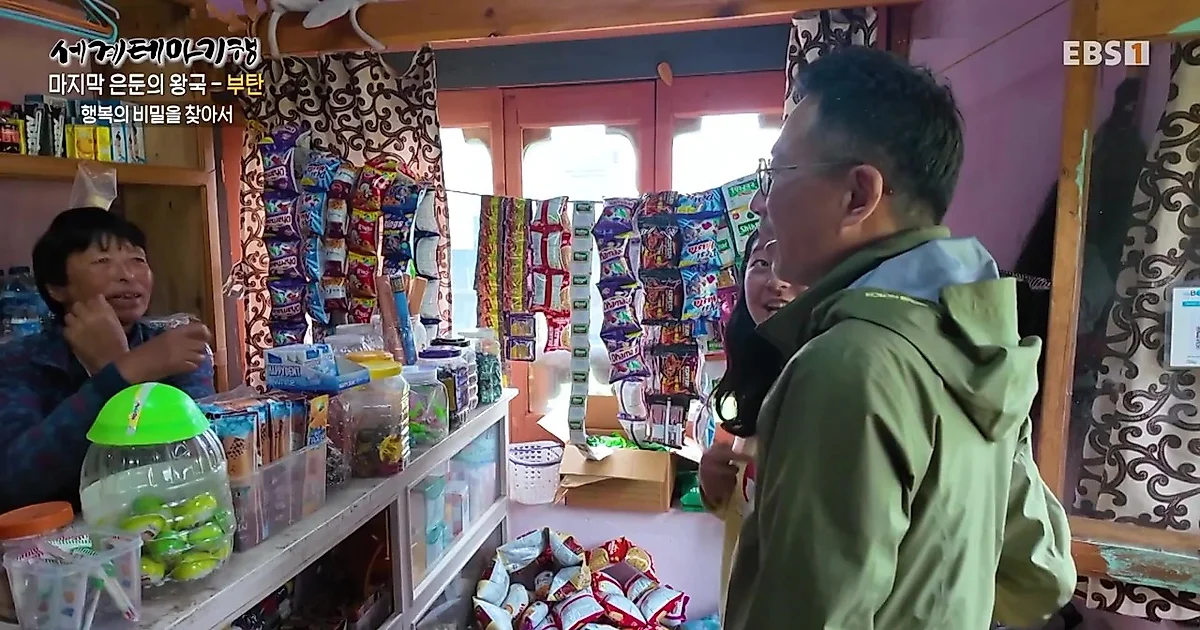
EBS 'World Theme Travel' has visited Bhutan for the first time in 8 years. Bhutan is entered through Paro International Airport, the country's only international airport, and is a nation where one cannot travel freely without a guide. The journey begins in the capital, Thimphu. Rather than a large metropolis, Thimphu feels like a quiet traditional city nestled in a valley, but Norzin Lam, the bustling main street, is the most lively area in quiet Thimphu. It is a busy scene with much more traffic and people than expected.
Intersections Without Traffic Lights, Thimphu Moving via Hand Signals
There is something on this street called a specialty of Thimphu: the traffic police. At the central intersection, which is the heart of Thimphu's main road, traffic police control vehicles with hand signals instead of traffic lights. This means there are no traffic lights on the street at all. Vehicles move in perfect order according to the colorful hand signals that look like dancing, and because the signal must not be interrupted, shifts are carried out by signaling simultaneously during handovers.
The traveler described this sight as choosing 'Bhutanese-ness' over efficiency and convenience. While it is unknown how long the sight of traffic police using hand signals instead of traffic lights will continue, they expressed a hope that it remains a symbol of Thimphu for a long time. It was his intense first impression of Bhutan: a country that is not refusing to develop, but rather a country that chooses its own direction and speed of development.
The Table and Traditional Houses of a Buddhist Nation That Does Not Kill
The traditional restaurant visited under the guide's guidance requires climbing steep stairs. Traditional Bhutanese houses usually consist of three floors, with the 2nd and 3rd floors being the most used; this restaurant is on the 3rd floor. A table served with various dishes, similar to Korean side dishes, included Ema Datshi (chili cheese stew), Kewa Datshi (potato cheese stew), and Pakshiap (pork vegetable stir-fry).
Meat is usually eaten semi-dried. Because Bhutan is a Buddhist nation that does not kill, it only imports dried meat through India. Since they import slaughtered meat, most of it is brought in dried, which results in a chewy texture. The group finished their first meal in Bhutan by shouting 'Zhimbay,' the Bhutanese word for 'delicious.'
The traditional house visited next is a 20-year-old building, but the painting and exterior are so clean that one could believe it was just built. Climbing steep, ladder-like stairs leads to an unexpectedly cozy space, and in general households, the 2nd floor is the main living space. On the walls of the house, photos of the royal couple are hung. The current King of Bhutan, the 5th King Jigme Khesar Namgyel Wangchuck, receives the love and respect of his people through his commoner-like actions, and he is also famous for his devotion to monogamy, unlike the previous kings who practiced polygamy.
The most sacred place in the house is the prayer room. Called 'Choesham' in the Bhutanese language, it is usually located at the highest part of the house. Bhutan also defines Buddhism as the spiritual heritage of the nation in its constitution. It is a life where faith is part of daily existence.
The Haa Valley Farmhouse Stay That Only Opened in 2002
Haa Valley was once called a forbidden valley. Due to being a border area with Tibet, it was opened to the outside world as late as 2002, the latest in Bhutan, and since its opening, travelers seeking the unique purity of Bhutan have been finding their way there through word of mouth. This village, with houses lined up along the valley, is a typical mountain village where people live mainly through farming and livestock, and the residents are indigenous people who have lived here for generations.
Upon arriving at the guesthouse operated by sisters, the owner hangs a white cloth called a Khata around their necks as a sign of welcome. The guesthouse is also a traditional Bhutanese house, where each floor has a designated role for its space. Despite the passage of time, the bond remains strong, and even after 30 years, it stands firmly; the stairs are narrow and steep to allow for more living space. In the Haa region, many indigenous religious rituals still remain, leaving traces throughout the house, and Buddhist symbols representing harmony and cooperation are drawn on the walls. The first treat for the guests is Suja, a fragrant Bhutanese butter tea.
Laya Village at 4,000m Altitude and Taktsang Monastery Atop a Cliff
According to the video description, the journey continues to the northern Gasa region in the Himalayas, to the village of Laya at an altitude of 4,000m. Laya, located in a mountain valley where cars cannot enter, has little interaction with the outside world and is said to still retain many unique customs, including a culture of polyandry where a husband has multiple wives in one household. At a higher altitude than Laya, a couple who has traditionally raised yaks, which inhabit altitudes of at least 4,000m, is met to glimpse nomadic life and taste yak cheese.
Taktsang Monastery, which must be visited at least once when coming to Bhutan, is a cliffside monastery that can be reached after climbing a steep mountain for about 2 hours. It is also called 'Taktsang Monastery' (Tiger's nest) because legend says the high Buddhist monk Padmasambhava flew in on a tiger to practice there, and the interior is shrouded in mystery as filming is strictly prohibited. In Talo village in the Punakha region, one can hear the story of how four queens came from one village—the story of four sisters who married the 4th King of Bhutan—and residents gather to chat in a temple used like a village hall. In the rugged mountainous city of Trongsa, following the sound of drums, one encounters a shrine where a shaman performs rituals, meeting the religion of this place where Buddhism and shamanism are combined.

하비이슈에서 문화·라이프 분야를 주로 취재합니다. 사회·이슈, 건강·과학 기사도 함께 씁니다.


Comments 0