A Crossroads of Four Currents... Why the Galapagos Sea Became a Paradise for Rare Animals
The Galapagos Islands serve as a unique evolutionary laboratory where tropical and polar species coexist due to the convergence of four major ocean currents.
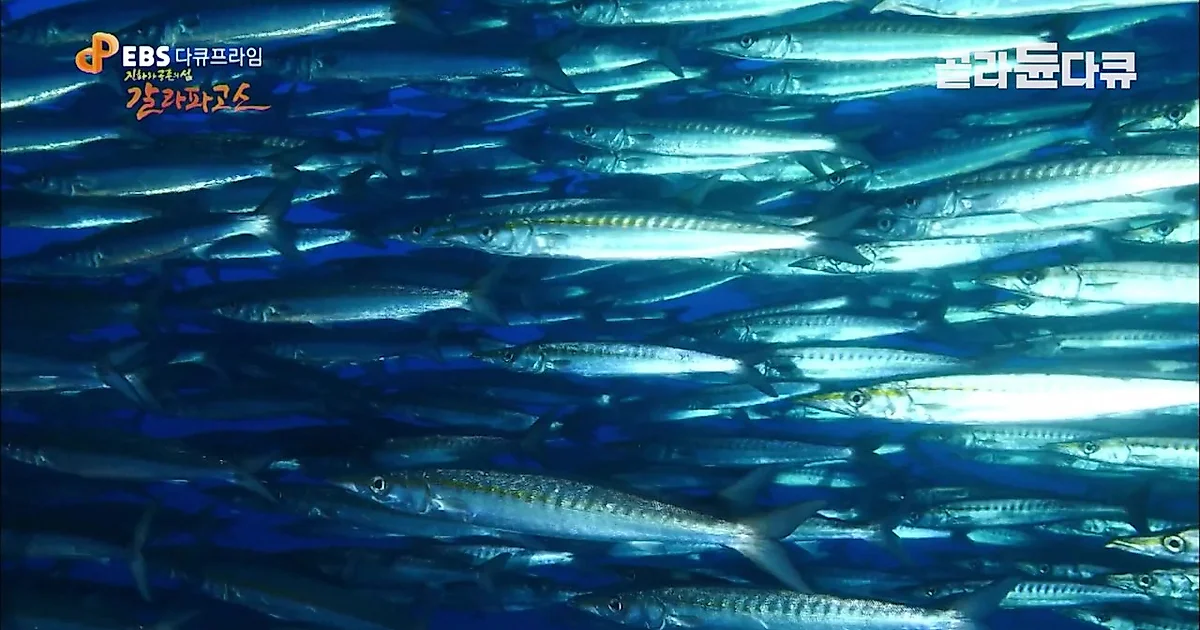
The Galapagos, an isolated island in the middle of the Pacific Ocean, is called a 'living evolutionary laboratory' and is famous as a habitat for rare flora and fauna that cannot be seen anywhere else. Comprising about a hundred reefs and rocky islands centered around thirteen large islands, the Galapagos hosts both tropical and polar animals despite being located on the equator. The EBS 'Docuprime - Galapagos, Island of Evolution and Coexistence Part 2: Sea of Chaos,' broadcast on August 7, 2018, seeks the root of this phenomenon in the ocean. The Galapagos sea is a crossroads where four currents pass, and the meeting of cold and warm currents has made this place a paradise for rare animals. Although each ancestor lived in opposing climates, they have gathered under one roof in the Galapagos after millions of years.
Abundance of 'Fish Everywhere' Drawn Up by Deep Sea Water
What makes the Galapagos sea so abundant? The answer lies in the intersecting currents. In July, the flow of the warm Panama Current weakens, and the cold Humboldt Current rising from around Antarctica joins in; at this time, deep sea water hits the islands and surges upward. The nutrient-rich deep sea water meets the equatorial sun, causing a massive explosion in phytoplankton. Thanks to the deep sea water, this becomes a sea where not only tropical marine life but also polar creatures can live.
Thanks to the cold currents, countless algae grow on the rocks, and the strong equatorial sunlight causes the seaweed to grow rapidly. Sea turtles, representative herbivores of the sea, swim leisurely, choosing good spots and enjoying their meals slowly without needing to rush because food is everywhere. Sea lions, which occupy the beaches, enjoy sunbathing but immediately set out to hunt when hungry, acting as representative omnivorous predators that devour various marine creatures such as squid and sardines. Thanks to the nutrient-rich seawater, the fish are plump and highly diverse, and the broadcast described it as a place where "it's half water, half fish." The swimming of sea lions, whose intentions seem unclear whether they are trying to catch prey or play with the fish, is explained as the leisure provided by this abundance.
The calm surface where small fish gather looks peaceful, but it is a place like a battlefield. This is because of the seabirds circling the coast. When seabirds discover food, they call their companions and spread out into large formations for hunting. The most unique hunting method is the collective diving technique of the blue-footed booby, a high-level skill where they dive as fast as bullets to snatch prey. The name 'blue-footed booby' originated from sailors who first saw these birds and called them 'boobies' (fools) because they were easy to catch, but it does not suit their agile hunting appearance. Their cute appearance, looking as if they are wearing blue boots, is a twist charm different from when they hunt.
The Only Penguin Living in the Tropics Through Adaptation and Evolution
When the cold currents strengthen in late August, the islands are buried in thick fog every day. There is a guest that came here from far away in Antarctica, riding the cold deep sea currents of old. It is the Galapagos penguin, which is only 50cm tall. Having evolved by reducing its body size to adapt to the hot Galapagos, this penguin stays mainly in the cold sea during the hot day and comes up to land when the cool night arrives. Through adaptation and evolution, it has become the only penguin living in the tropics.
In the always calm and quiet coastal areas, there are groups that look golden, like fallen leaves in a lake. They rest along the coast in the morning and scatter to hunt for food in the afternoon. Green sea urchins nestled between rocks cover themselves with various things such as stones, leaves, and shell debris; if their "hat" is removed, a relentless attack from fish follows immediately. The sea urchin's hat was essentially camouflage to hide its weakness.
Mangrove Forests Acting as a Shield Against Waves and the World's Largest Shark Sanctuary
Unlike the calm coast, the waves become rough and powerful just a little further out. The mangrove forest acts as a reliable shield against the waves that seem to crash as if to break the lava coasts. Mangroves are also migrants that came to the Galapagos via ocean currents, and their strong roots that spread in all directions provide the strength to withstand waves, currents, and typhoons. Unlike other trees, they are resistant to salt and can live well in seawater, and they also play a role in absorbing massive amounts of carbon dioxide from the atmosphere and purifying water quality. Most weak creatures eat and grow here, passing down generations, and it serves as a safe shelter for schools of young fish to live. It is also the best place for sea turtles to take a temporary rest.
If you go just a little further out to sea, it is a playground for large whales and sharks. In 2016, the world's largest shark sanctuary was established in the Galapagos, and the number one protected species is the whale shark. If caught catching such creatures in the Galapagos, one receives a heavy penalty that prohibits all fishing activities forever. About a dozen species of sharks inhabit the Galapagos, and the whitetip reef shark, which lives around deep-sea rocks, is nocturnal, sleeping during the day and transforming into a hunter at night. Although they cannot see well in the dark, they can smell prey from a distance and have a sixth sense to detect the heartbeats of frightened fish, allowing them to find them no matter where they hide.
The scalloped hammerhead shark, called a hammerhead due to its head shape, also appears in this sea. The reason why the scalloped hammerhead, which is endangered due to finning, appears particularly frequently during this period is that it is a migratory species that periodically circles Malpelo in Colombia and the Galapagos. The broadcast reported that the appearance of large sharks often makes the Galapagos sea feel like a place of fear.

하비이슈에서 건강·과학 분야를 주로 취재합니다. 테크·미래, 사회·이슈 기사도 함께 씁니다.



Comments 0