How a Procession of 6,000 Crossed the Han River: Reenacting King Jeongjo's 'Greatest Festival' from 220 Years Ago
A historical reenactment of King Jeongjo's grand procession from 220 years ago was held in the heart of Seoul…
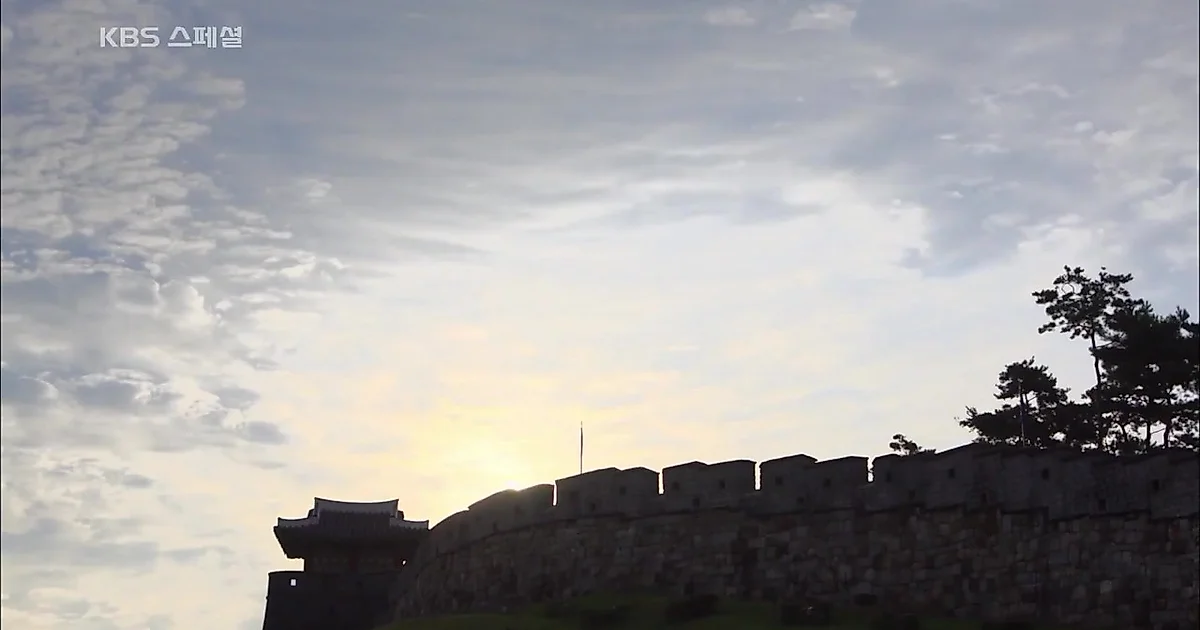
About 220 years ago, a king of Joseon led a massive procession of 6,000 people to cross the Han River. It was not a simple movement, but the most grand festival in Joseon history, designed to be enjoyed together with the people. Recently, this historical moment was reenacted in the middle of downtown Seoul.
"I wanted to be happy with the people" King Jeongjo's political decision and the festival
According to a KBS documentary video, this reenactment event is based on the journey King Jeongjo took in 1795 (the year of Eulmyo) to visit Hyeollyungwon, the tomb of his father Crown Prince Sado, to celebrate the 60th birthday of his mother, Lady Hyegyeong. At that time, King Jeongjo embarked on a long eight-day journey accompanied by his mother, and this reenactment followed the route of two of those days exactly.
King Jeongjo's royal procession holds more meaning than a simple march. An interviewee in the video explains the reason King Jeongjo visited Hwaseong, stating, "It was a procession with strong political purposes to reinstate his father, Crown Prince Sado." At the same time, King Jeongjo left the deep palace to directly observe the lives of the people, dreaming of a peaceful era where everyone could be happy. In fact, while King Yeongjo performed royal processions about 1.5 times a year, King Jeongjo was so active in communicating with the people that he performed them nearly 3 times a year.
This magnificent sight was recorded in a document called 'Wonhaeng Eulmyo Jeongni Uigwe'. King Jeongjo had court painters capture this scene on canvas, and he distributed them as printed materials including typefaces and woodblock prints. Thanks to this, even 220 years later, the scale and appearance of the procession at that time can be specifically confirmed.
A procession of 6,000, the wisdom of the 'floating bridge' crossing the Han River
This reenactment procession started from Donhwamun Gate of Changdeokgung Palace, passed Sungnyemun Gate, and reached the Han River. The number of people mobilized at the time was the largest in Joseon, reaching about 6,000 people and 400 horses. The procession created a spectacular sight, with the Gyeonggi Governor and the Chief State Councillor leading the way, followed by the Byeolgidae, cavalry, royal guards, and colorful flag units.
The biggest obstacle was the Han River. 220 years ago, King Jeongjo already used a 'floating bridge' method, connecting boats to create a bridge, to move a large number of people. In this reenactment, about 200 members of the Army Engineer unit were deployed to recreate this wisdom. Using advanced equipment, a temporary bridge 10m wide and 300m long was constructed in a form that connects the north bank of the Han River to Nodeul Island.
A military official said in the video, "I am proud that we can recreate the creative wisdom of our ancestors, who installed and operated a floating bridge by connecting boats 220 years ago, using advanced equipment." Through the completed floating bridge, the procession safely crossed the river, and citizens also enjoyed the festival scene by using this temporary bridge to cross the Han River.
A 100-ri journey from the capital to Suwon Hwaseong Fortress
The procession, having departed from Changdeokgung Palace, crossed the Han River via Yongsan and Noryangjin, and stayed overnight at Siheung Temporary Palace. After that, a long journey of about 100 ri continued until arriving at Suwon Hwaseong Fortress through Anyang and Uiwang. Before the King's arrival, a strict security system was also operated, such as deploying ambushes in the village to prepare for any possible attacks.
Citizens and foreigners met on the scene were marveled by the special experience of witnessing a Joseon-era royal procession firsthand. One foreign citizen shared the heart-pounding experience, saying, "It is very impressive that they are maintaining the same formation as 220 years ago." It was a moment when the 'festival with the people' that King Jeongjo dreamed of 220 years ago was reenacted once again in the modern downtown of Seoul.
Comments 0