The Man Who Burns 1 Ton of Oak Every Day: The Taste of 'Cast Iron Lid' Perfected After 20 Years of Research
The article profiles Kim Chun-gu, who has spent 20 years researching "fire flavor" using cast iron lids and oak wood in Damyang, and Seung-dae…
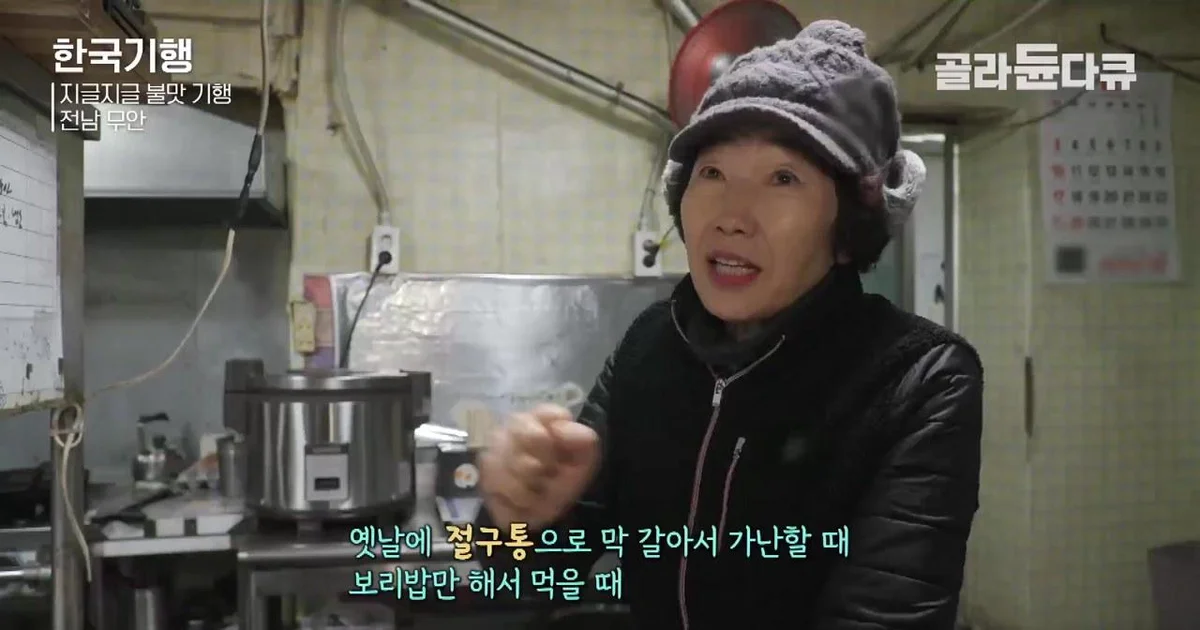
When winter comes and the tip of the nose feels cold, there is a taste that comes to mind particularly often. The intense heat that pierces through even the fierce biting wind, and the deep smoky flavor that spreads throughout the mouth. In Damyang, Jeollanam-do, there is a man who has staked his life on 'fire flavor' by splitting more than 1 ton of oak firewood every morning. According to an EBS documentary video, Kim Chun-gu boasts skilled craftsmanship, having split firewood since his elementary school days, and is a person who has researched cooking using cast iron lids for over 20 years.
1 Ton of Oak Every Day, the 1,000-Degree Heat That the Cast Iron Lid Endures
Kim Chun-gu's main weapon is a cast iron lid. After obtaining his Korean food cook license at the age of twenty, he has spent 20 years focusing on a single cast iron lid to research fire flavor. The oak firewood he uses has extremely powerful heat. In the video, Kim explains, "The heat is intense enough to melt other metals, but this cast iron lid endures that heat and delivers it evenly to the food, creating an amazing harmony."
His signature menu is cast iron lid spicy braised chicken (Dak-bokkeum-tang). He puts native chicken into a spicy seasoning aged with green onions and simmers it slowly for more than 40 minutes over the hot firewood. The strong heat of the firewood heats up the cast iron lid, and that heat imparts a deep smoky flavor to the broth. Kim says, "I feel true euphoria when my friends or family eat the food I make with relish," and says that to him, fire flavor is the 'taste of a hot life.'
His research does not stop at the cast iron lid. At the 'Fire Flavor Laboratory' set up in a farm hut near his shop, he experiments with all kinds of dishes that can be made with a cast iron lid, such as pancakes, noodle dishes, and grilled meat. Recently, he even manufactured a dedicated grill for roasting whole pigs, realizing the 'crispy on the outside, moist on the inside' taste.
The Secret of Muan Passed Down Through 70 Years, 3-Year Aged Rice Straw
The journey of fire flavor leads to Muan, Jeollanam-do. There is an old restaurant there that has held its place for over 70 years. The key to this restaurant's taste lies not in the meat, but in the 'rice straw.' According to the video, they use aged rice straw that has been completely dried in a greenhouse for more than 3 years to remove all moisture.
The 'straw-fire grill' of this restaurant, which Seung-dae continues, utilizes instantaneous heat. When the rice straw burns, the temperature soars to nearly 1,000 degrees. This powerful heat quickly cooks the meat in just 40 seconds, capturing it so the juices do not escape. At the same time, the unique scent of the rice straw plays the role of perfectly eliminating the gamey smell of the meat.
The origin of this straw-fire grilling is interesting. It became a 70-year history as the method of his grandfather, who used to grill mullet caught in the Yeongsan River over a straw fire, was passed down to his daughter-in-law and grandson. When paired with 'Chilgyejang,' which contains the taste of the sea, one can feel a flavor that seems to capture both the mountains and the sea of Muan in a single bite.
Unceasing Experiments, Finding New Tastes at 120 Degrees
As important as preserving tradition is the challenge toward new tastes. Seung-dae of Muan is also researching new cooking methods using rice straw. While the existing method was to grill quickly at a high temperature of 1,000 degrees, the new method involves a preliminary cooking with rice straw and then cooking it for a long time inside a jar while maintaining a temperature of about 100 to 120 degrees.
This aims for a clean taste where the scent of rice straw is subtly infused, rather than an intense smoky flavor. As he says, "The taste and aroma change greatly depending on what kind of fire and temperature you grill with," the research of these people toward fire flavor is burning hotly even today.



Comments 0