2.15 Trillion Tons of Groundwater Use Shifts Earth's Axis, Warning of 'Invisible Pillars' Threatening Human Survival
The depletion of groundwater, which accounts for about one-third of the world's freshwater, is causing significant environmental shifts…
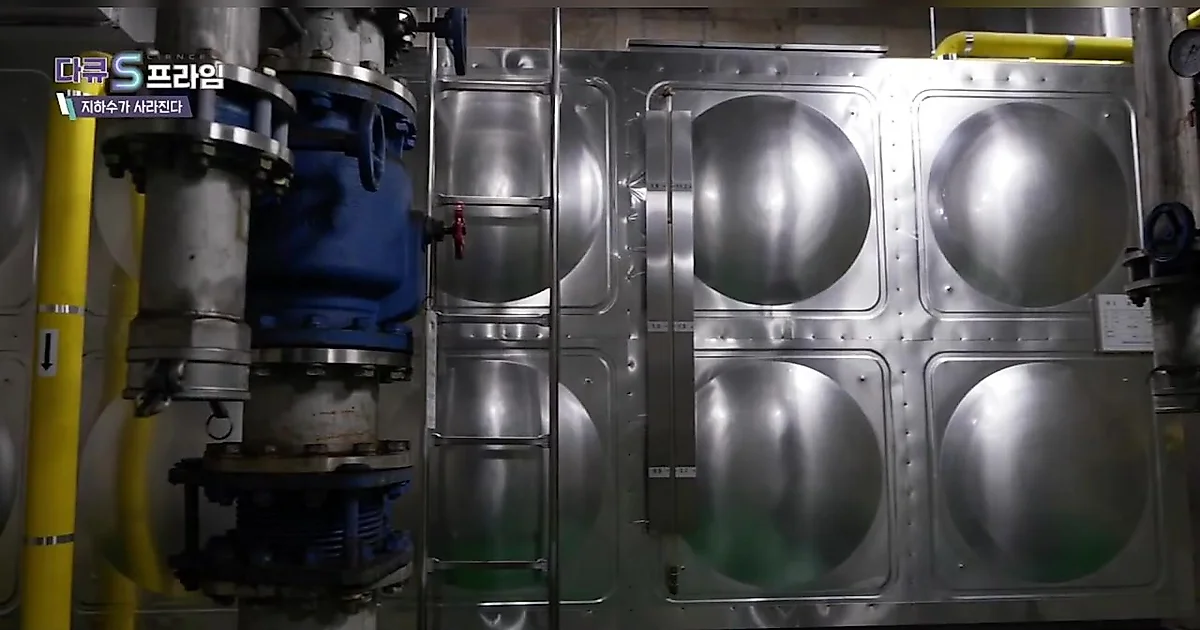
A massive, invisible resource beneath the ground, groundwater, is collapsing. As groundwater, which is directly linked to human survival, is depleted, warnings have emerged that it is going beyond food shortages, ecosystem destruction, and land subsidence to even change the Earth's rotational axis. According to a YTN Science video, groundwater, which accounts for about one-third of the world's freshwater, plays a key role in maintaining 'groundwater-dependent ecosystems' such as rivers and wetlands, beyond being a simple water reservoir. Groundwater, formed as rain and snow seep into the surface and fill underground spaces, is an essential resource that completes the water cycle, but recently, the speed at which it is disappearing is accelerating more than before.
The use of 2.15 trillion tons of groundwater moved the Earth's axis by 80cm
Groundwater depletion is not merely a problem of water shortage. According to research by Professor Seo Ki-weon's research team at Seoul National University, as humanity used approximately 2.15 trillion tons of groundwater from 1993 to 2010, sea levels rose, and as a result, it was observed that the Earth's rotational axis shifted by about 80cm. Although this is a small level compared to natural changes, the fact that continuous groundwater reduction can change the physical axis of the Earth is highly significant.
The movement of water and ice shakes the balance of the entire Earth. If groundwater on land is excessively extracted, that water eventually flows into the ocean, raising sea levels. This works in conjunction with the phenomenon of Antarctic glaciers melting and flowing into the sea, constantly changing the physical environment of the Earth. The video explains that the Earth is not staying still, but rather, water and air are constantly moving due to meteorological and climatic phenomena, changing the Earth.
The breadbasket of the desert and sinking cities: extreme crises created by groundwater
The damage from excessive groundwater use is appearing in specific figures all over the world. The California Central Valley, a representative breadbasket in the United States, is a desert region where it does not rain, yet it is pumping up massive amounts of groundwater to secure agricultural water. Groundwater levels in California, confirmed through satellite data, show changes depending on the season, and due to excessive use for agriculture, tens of meters of land subsidence have occurred over the past 100 years. In particular, the San Joaquin Valley has subsided by as much as 8.5m in some parts, and some areas where drought conditions have worsened are facing a serious situation, sinking by 6m annually.
The situation in Jakarta, the capital of Indonesia, is even more desperate. With more than 60% of the city's area already below sea level, concerns are rising that 90% of northern Jakarta will be submerged below sea level by 2030 as rising sea levels due to global warming overlap with indiscriminate groundwater use. In response, the Indonesian government is proceeding with the relocation of its capital by constructing a new city. Such land subsidence leads to secondary damage like road collapses or gas pipe ruptures, directly threatening human safety.
Groundwater changes caused by earthquakes and purification research using microorganisms
Groundwater is also vulnerable to external shocks. A recent magnitude 7.6 strong earthquake in Japan caused a water level change of up to 107cm at a groundwater observation station in Mungyeong, Gyeongsangbuk-do, South Korea. A strong earthquake in Türkiye, located more than 7,000km away, also affected the ground and groundwater levels in South Korea. The Korea Institute of Geoscience and Mineral Resources operates groundwater observation stations in 11 locations nationwide, including Mungyeong and Gangneung in Gyeongsangbuk-do, to analyze earthquake detection and observe changes in groundwater mobility when earthquakes occur. This is because seismic waves can cause contaminated groundwater to move into new aquifers (layers where groundwater flows), causing water quality degradation, or can damage ground stability through changes in groundwater levels.
To respond to this, professional institutions such as the Korea Institute of Geoscience and Mineral Resources are seeking various solutions. A field receiving particular attention is purification technology using microorganisms existing in the groundwater environment. They are researching ways to remove groundwater contamination without separate chemical treatments by analyzing microorganisms that play a key role in the natural purification process. Additionally, through the 'Groundwater Government Map Project', work is being carried out to build data to supply stable groundwater resources to areas where the water supply is difficult to reach. In fact, areas without a water supply, such as Hwein-myeon, Boeun County, North Chungcheong Province, are solving problems by using village water supplies through groundwater wells.
South Korea is no exception. The annual rainfall is approximately 1,300mm, which is 1.6 times more than the global average, but it has the characteristic of being concentrated in the summer and flowing into the sea before it can even be used. According to 2021 statistics, the average daily water use per person is 302 liters, which has been steadily increasing since 2017, and since the 1990s, 48 cities and counties have experienced habitual drought damage. Experts emphasize that while groundwater has better buffering capacity than surface water, once it is contaminated or depleted due to the combination of climate change and excessive extraction, it takes a massive amount of time and cost to restore it. It is a critical time to establish systematic plans for sustainable water resource management.

하비이슈에서 건강·과학 분야를 주로 취재합니다. 테크·미래, 사회·이슈 기사도 함께 씁니다.

Comments 0