The 5cm Gudgeon's Struggle to 'Secure a Home': The Only Fish That Builds Nests in Aquatic Plants
A documentary by EBS explores the unique reproductive strategies of various river fish…
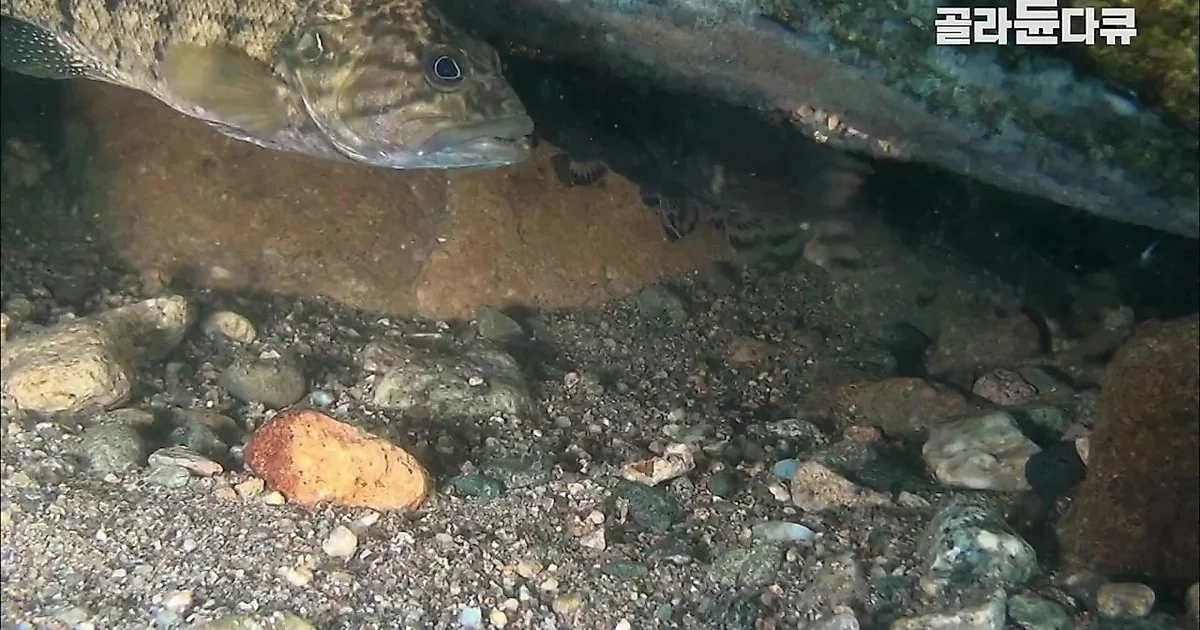
Not many know that even in the underwater world, there are 'architects' who build nests as elaborately as birds. The protagonist is the gudgeon, a small fish measuring about 5cm in length. While they usually swim in schools to avoid the eyes of predators, they engage in a fierce struggle to secure their own private sanctuary during the breeding season. Carrying spines on each fin, gudgeons live in areas with aquatic plants, employing a survival strategy that reduces the energy spent protecting themselves from predators through collective living and provides an advantage in finding food.
"No Home, No Attention" — The Sophisticated Architecture of the Gudgeon
According to EBS documentary footage, a 'home' means more to a male gudgeon than just a simple shelter. When the breeding season arrives, the male's body color darkens as he sets out to find a female. However, no matter how much a penniless male without a home pursues a female, he is often rejected. To be chosen by a female, the male must complete a perfect nest.
The gudgeon possesses the unique habit of being the only fish that builds nests on the stems of aquatic plants. The male first secures a spot on a seemingly sturdy plant stem and then tears away materials such as roots or stems of surrounding plants with his mouth. This process is remarkably similar to how a bird builds a nest; the way he brings materials and weaves them tightly between the aquatic plants as if sewing is almost wondrous. Once enough material is gathered and the frame is formed, the male uses his entire body to shape it into a round form. During this time, the male uses the sticky bodily fluids secreted from his body like glue, circling the nest to coat the materials so they weave together well.
The final key determining the quality of the nest is the 'size of the entrance.' Since spawning occurs inside the nest, the male puts his heart and soul into adjusting the entrance size so that it fits the female's body perfectly while remaining hidden from predators. It cannot be too small, nor can it be too large, as that would be dangerous. Once this sophisticated design is finished and the nest is complete, the female, as if won over by the male's devotion, approaches first to share love and conceive life in the sturdily built nest.
From the Lamprey's Sandy Bridal Chamber to the Goby's Secret Spawning
The river ecosystem is filled with unique reproductive strategies of various living things, not just the gudgeon. Unlike typical eels, the lamprey returns to the river to prepare for breeding. In the video, a pair of lampreys was captured using their sucker-shaped mouths to carry heavy stones and using their tails to dig out sand to create a bridal chamber. Once completed, the lampreys mate by intertwining their bodies, during which the male stimulates the female's abdomen. Named for having seven pairs of gill openings, the lamprey hurriedly covers its eggs with sand after spawning to protect them from the eyes of other creatures.
The spawning method of the goby is even more exotic. The male holds the female and performs a so-called 'spawning dance' by spinning around, a unique sight described as having never been observed or reported before. As the dance becomes increasingly intense and the male fully envelops the female's body, the eggs are released. Once born this way, the eggs hatch within 2 to 3 days if the water temperature is appropriate. In the case of the Korean sleeper, the male does not leave the side for a single moment, guarding the eggs until they hatch.
The Fierce Egg Guarding of the Korean Sleeper and the 'Brood Parasitism' War of the Bitterling
The survival competition in the river continues even after spawning. The Korean sleeper cleans a spawning site under a rock and lays eggs, which the male then protects; during this process, a war breaks out with the 'Bitterling.' The Bitterling uses a 'brood parasitism' strategy, secretly laying its eggs in the Korean sleeper's spawning site. To protect its own eggs, the Korean sleeper engages in fierce battles with the invading Bitterlings, defending the spawning site while revealing a ferocious temperament. Although the Bitterling persistently attempts to invade and even pushes the Korean sleeper back, the Korean sleeper never gives up its eggs.
Meanwhile, the Korean sleeper-like fish, which looks similar to the Korean sleeper, shows the characteristic of attaching and raising eggs to the stems of aquatic plants. The male Korean sleeper fans his fins to supply fresh oxygen to the eggs and cares for them with utmost devotion, never leaving their side until the eggs hatch. When eyes appear and shapes emerge from the once-transparent eggs, the Korean sleeper strengthens its vigilance close by until it is time for the eggs to hatch. Finally, the new life that sheds its eggshell and becomes a fry leaves the aquatic plant zone after passing the most dangerous period to encounter a new world.
At the end of the river's long journey, the sweetfish concludes its long travels. Sweetfish that have ascended to deep valleys descend to the lower reaches of the river to prepare for spawning, and once the female searches for a good place to spawn, the males follow behind. Sweetfish lay their eggs in areas with strong currents to supply plenty of fresh oxygen to the eggs. To increase the survival rate, the female moves to several locations and spawns multiple times, and in this process, the underwater world is once again filled with the intense movement of life.



Comments 0