Reducing 30 sessions to 6 days: The principle of Deep TMS that improves the brain's 'roads'
Deep TMS is presented as an alternative to traditional medication for depression and burnout by improving brain circuitry rather than just supplying chemical…
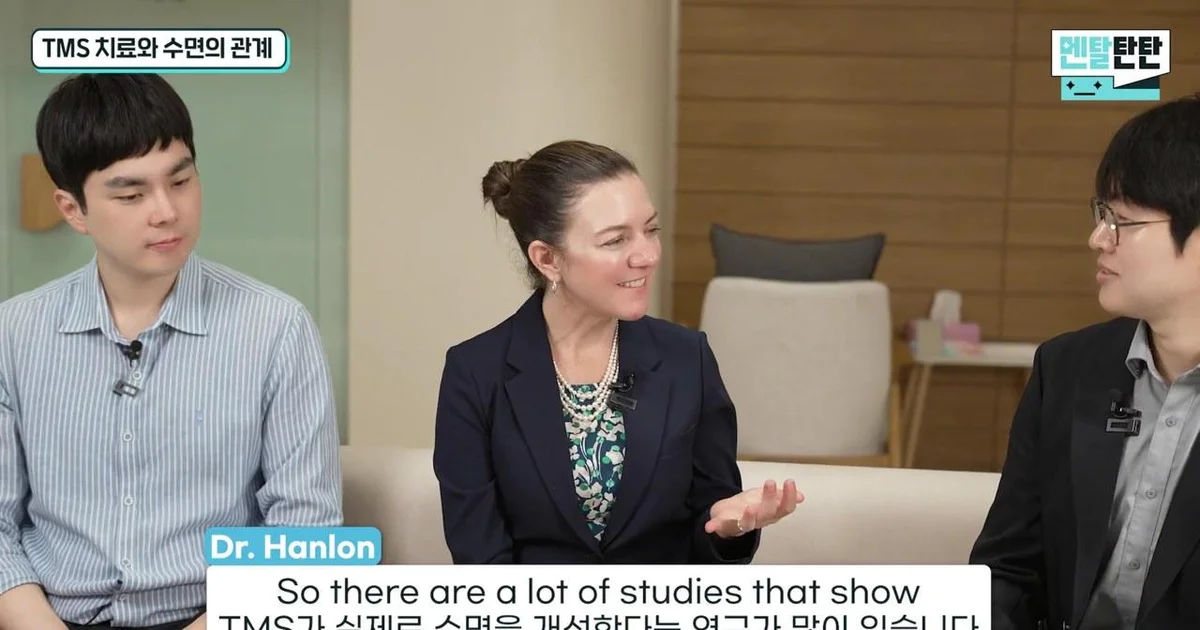
For patients suffering from depression or burnout, medication is the most common choice. However, many experience symptoms that alleviate while taking medication but reappear once the medication is discontinued. According to a video from 'Mental Tantan | A Psychiatrist's Mental Health Management Channel', Deep TMS, a brain stimulation therapy gaining recent attention, is being presented as an alternative that can supplement the limitations of these existing treatments.
Medication is a 'delivery truck', brain stimulation is 'road improvement'... differences in mechanisms of action
To understand the difference between medication and brain stimulation therapy, the video uses a 'delivery' analogy. While medication acts on the synapses (connection points between nerve cells) in the brain to play the role of 'increasing the number of delivery trucks (drug components)', brain stimulation therapies like Deep TMS are explained as playing the role of 'improving the road itself or digging new roads'.
The principle of Deep TMS is similar to a smartphone's 'wireless charger'. Dr. Colleen Hanlon, the medical Vice President of BrainSway, explained in the video, "Just as a wireless charger delivers energy to a smartphone without wires through electromagnetic induction, TMS coils deliver energy to specific brain circuits to restore low-energy brain circuits." In other words, rather than injecting chemical components like medication, it is a method that acts directly on brain nerve cells (neurons) using magnetic fields.
80% of treatment effects maintained after 1 year... possibility of structural changes
This method, which is like paving a road, shows a difference in terms of the durability of the treatment effect. It is based on the logic that while the number of delivery trucks can be increased or decreased as needed, a well-paved road remains for a long time. The video cited research results observing the progress of patients who received Deep TMS treatment after one year. According to the study, approximately 80% of patients maintained a good state even after one year, and only about the remaining 20% required additional medication.
This suggests that Deep TMS can contribute to restoring the structural health of the brain beyond simple temporary symptom relief. However, since such effects and specific applications can vary depending on the individual condition of the patient and the type of disease, it must be decided through consultation with a specialist.
30 sessions in just 6 days? Clinical evidence of 'Swift Protocol'
Existing TMS treatment typically requires about 30 sessions, which placed a heavy burden on patients to visit the hospital. To solve this, the 'Swift Protocol' was developed. This method takes the form of 'accelerated therapy', where the process of undergoing 10 minutes of treatment, resting for 50 minutes, and then receiving 10 minutes of treatment again is repeated.
Patients may worry that the treatment effect might decrease if the treatment period becomes too short, but Dr. Colleen Hanlon presented the results of a randomized controlled trial (RCT) conducted on 104 subjects as evidence. The study results showed that the response rate and remission rate (a state where symptoms almost disappear) between the existing method (once a day, 30 sessions total) and the Swift Protocol (intensive treatment for 6 days) were similar, with no statistically significant difference. This shows the possibility of maintaining treatment efficacy while increasing patient convenience.


Comments 0