"Foreign ligaments entering my body"... The rigorous processes of tissue banks that erase unfamiliar cells
A Kokobora video explains the scientific processes used by tissue banks to process and store human tissues…
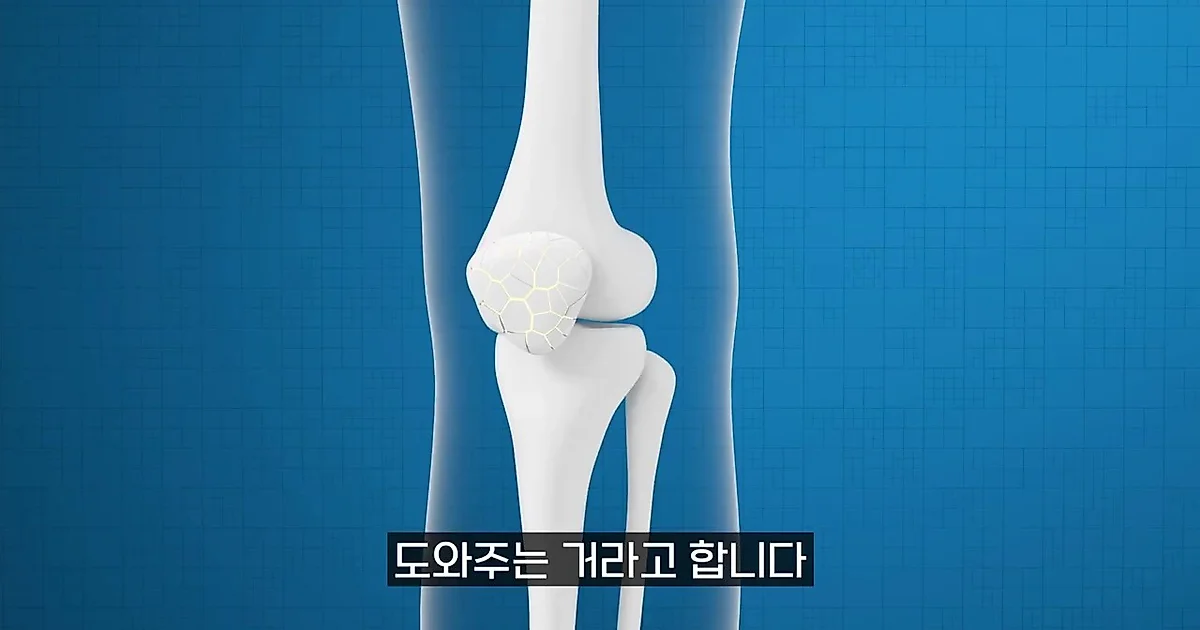
A participant who received a transplant of someone else's ligament due to an injury sustained during exercise felt curious. The question was how tissue taken from a deceased person's body can be transplanted without rejection and become a part of one's own body. According to the Kokobora video, the answer to this question lies in the thorough scientific processes of the 'tissue bank' where human tissue is stored and processed.
From ultra-low temperature storage at -70 degrees Celsius to freeze-drying, the survival strategy of tissue
Inside the tissue bank, various freezing facilities are lined up along with immense machine noise. Depending on the characteristics of the human tissue, storage methods are finely divided. Tissues such as blood vessels or valves are stored in liquid nitrogen tanks called 'dry super' to stop cell activity and maintain structure, and dedicated containers are used even when transporting them. On the other hand, bones or fascia are stored in ultra-low temperature freezers at levels around -70 degrees Celsius. In the case of bone tissue, it is managed using dedicated packaging boxes that check the temperature.
In particular, bone tissue may undergo a 'freeze-drying' process. According to the explanation in the video, removing the moisture from the tissue through freeze-drying can prevent decay and allow for safe storage. Bone tissue processed this way is delivered to medical institutions in triple packaging. The transplanted bone tissue plays the role of filling empty spaces in the patient's body, acting as a scaffold that allows the patient's own living bone cells to grow into it and form new bone.
Supplying 'essential transplant materials' that are difficult for the private sector, the role of public tissue banks
Tissue banks are divided into private and public. While private companies mainly deal with high-value-added products considering profitability, public tissue banks focus on supplying essential transplant materials that are absolutely necessary for the public. For example, they help patients who had to amputate bones due to cancer (tumors) recover their mobility by supplying large bones such as the femur. In the past, there were cases where amputation was inevitable if large bones could not be supplied, but due to the role of public tissue banks, patients can maintain bodily functions and return to daily life.
Large bones like the femur are bulky and involve high storage and transportation costs, but the annual usage in South Korea is not large, at about 30 units. Due to these characteristics, it is difficult for the private sector to handle them due to profitability issues, but public tissue banks take responsibility for supplying them. In this way, even if the usage is low, public tissue banks disclose and supply structural bones necessary for the public, as well as blood vessels, valves, and fascia required for organ or liver transplants.
Sterilization process that erases unfamiliar cells, "Not a single bacterium is allowed"
The key to ensuring that donated tissue does not cause an immune rejection response in the patient's body lies in the 'processing' stage. While organ transplants are performed immediately from brain-dead donors, tissue transplants are first sent to a tissue bank after being collected from the donor's body to undergo special treatment. In this process, the donor's cellular components are removed so that the patient's body does not recognize the transplant as 'something foreign.' The video explains that a special process to erase unfamiliar cells is conducted in the 'tissue processing room' to prevent immune rejection that could be caused by the donor's cells.
The processing room maintains a strict sterilization state equivalent to a hospital operating room. Workers must wear additional sterile clothing and thoroughly block the influx of dust. The video shows a thorough preparation process, such as wearing two layers of clothing to prevent dust influx and wearing them in a 'baggy pants' style so that the clothes do not stick out. The processing proceeds as follows. First, unnecessary fat and muscle are removed from the donated tissue and antibiotic treatment is applied. Afterward, a sterilization process is carried out using radiation to completely kill cells and bacteria.
The final step is the 'suitability test.' For sterilized instruments, a testing tool called 'B.D.I (Biological Indicator)' is used, which is a device that checks whether bacteria grow even after sterilization by inserting strong microorganisms. After putting the B.D.I into the machine, breaking it, and dropping the solution, it can only be used as an instrument if not a single bacterium is detected for a certain period of time. Additionally, sterilized tissue must be collected and requested to a testing institution to receive suitability, after which the final quality team makes a suitability judgment. If bacteria are detected during the testing process, the corresponding tissue is immediately sent to the disposal room and discarded.
The process of the transplanted tissue completely settling into the patient's body takes time. According to the explanation by Professor Chung Yang-guk of Seoul St. Mary's Hospital, the transplanted tissue initially exists as acellular tissue and, as time passes, comes into contact with the living tissue of the body. Afterward, blood vessels grow in and cells penetrate, and over a period of several months to 1–2 years, it is integrated as a part of the body. Therefore, it is important to focus on rehabilitation rather than excessive exercise for a certain period after transplantation.



Comments 0