'Insulin Secretion Function' More Important Than Diabetes Diagnosis: What are the Registration Criteria for Pancreatic Disability?
A new disability category, 'pancreatic disability,' has been established under the Act on Welfare of Persons with Disabilities of the Republic of Korea.
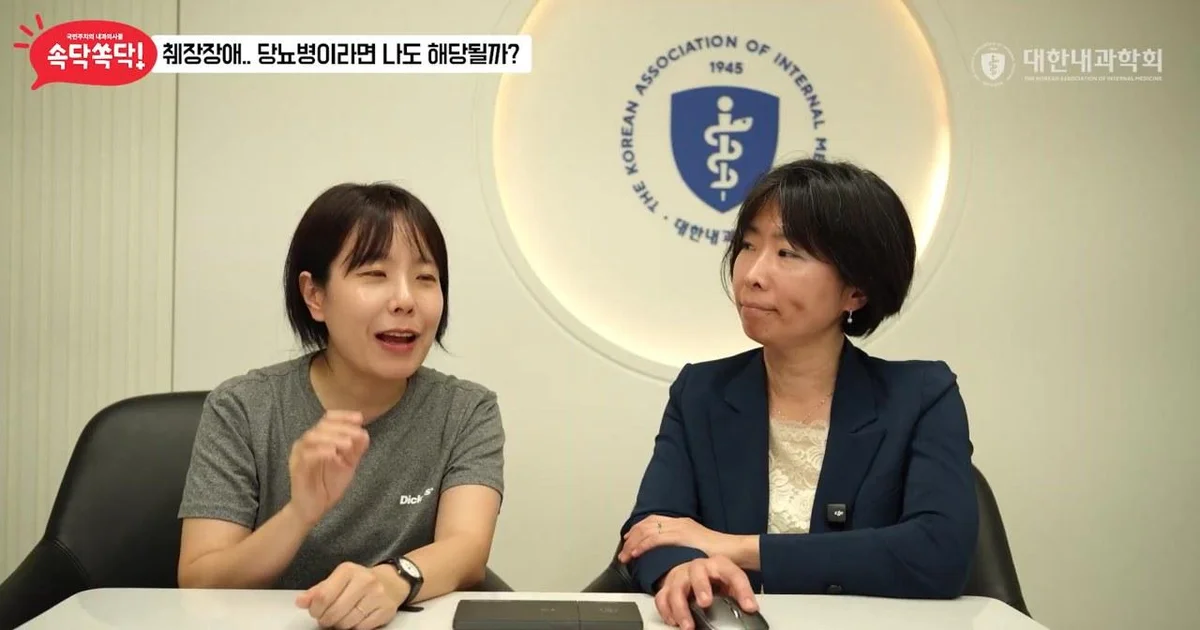
From July 2026, a new disability type, 'pancreatic disability,' has been established under the Act on Welfare of Persons with Disabilities of the Republic of Korea. While this opens a new path for patients who previously found it difficult to register for a disability based solely on a diabetes diagnosis, it does not mean a disability can be recognized simply by the name of the disease "diabetes."
'Insulin Secretion Ability' More Important Than Diabetes Diagnosis
According to the National Primary Care Physicians [Official Korean Association of Internal Medicine] video, the core of registering for pancreatic disability is not the diagnosis of diabetes, but rather how severely the pancreas's function of producing insulin has declined and whether the condition necessitates intensive insulin treatment.
The pancreas simultaneously performs 'exocrine function,' which helps digest food, and 'endocrine function,' which secretes hormones such as insulin. The newly established pancreatic disability targets those whose endocrine function is severely damaged, making daily life difficult without intensive insulin treatment.
Accordingly, most patients with type 1 diabetes are likely to meet these criteria, and even type 2 diabetes patients may be eligible for registration if they require active treatment, such as administering insulin multiple times a day. For patients with pancreatic cancer or chronic pancreatitis, the key to determination is how much insulin secretion function remains in the pancreas as a result, rather than the underlying disease itself.
'C-peptide' Test and Verification of Over 6 Months of Treatment Records
To be recognized as having pancreatic disability (severe disability), three main conditions must be met. The first is 'active insulin treatment.' This does not mean simply injecting insulin once a day, but rather continuously using 'multiple daily insulin injection therapy,' which uses both basal insulin and mealtime insulin, for 6 months or more, or using an insulin pump.
The second is the 'C-peptide' test result, which indirectly shows the pancreas's insulin secretion ability. According to the video, this applies when the blood glucose level is 140mg/dL or higher and the C-peptide level in the blood is less than 0.6ng/mL, or the C-peptide/creatinine ratio in the urine is less than 0.5nmol/mmol. Being administered a large amount of insulin does not automatically lead to recognition as a disability; the actual decline in pancreatic function must be proven through this test.
The third is the continuity of testing. For new registration of pancreatic disability, two tests must be performed within 6 months of the diagnosis date with an interval of at least 3 months between them, and both must meet the criteria. However, in cases where the entire pancreas has been removed or two or more type 1 diabetes-related autoantibodies are positive, a diagnosis can be exceptionally made even before completing the 6-month treatment period. However, even in these cases, at least 3 months of medical records are required.
Consultation with Endocrine Specialists and Re-evaluation Every 2 Years
Patients wishing to register for pancreatic disability must consult with a specialist. A medical certificate for severe pancreatic disability can be issued by an endocrinology and metabolism specialist (adult) or a pediatric endocrinology specialist (pediatric) who has continuously treated the patient for 3 months immediately preceding the disability diagnosis. Therefore, adult patients are encouraged to visit an endocrinology department.
The application for disability registration can be submitted to the community center having jurisdiction over one's place of residence, accompanied by a medical certificate, C-peptide test results, and medical records of 6 months or more. Management is required after registration. In principle, 'severe pancreatic disability' must undergo re-evaluation every 2 years. If the re-evaluation is passed three consecutive times, it may be exempted thereafter. However, patients who have undergone total pancreatectomy are excluded from re-evaluation due to the characteristic that it is difficult to expect functional recovery.
※ This article was written based on the contents of the video, and the actual determination of disability may vary depending on the specialist's diagnosis and administrative standards. Please ensure you consult professional medical staff for accurate diagnosis and treatment.



Comments 0